
The Suceava–Bălți power line is set to enter the construction phase, with completion expected within 24 months, while Transelectrica is advancing major transmission infrastructure projects under a ten-year investment plan exceeding 2 billion euros.
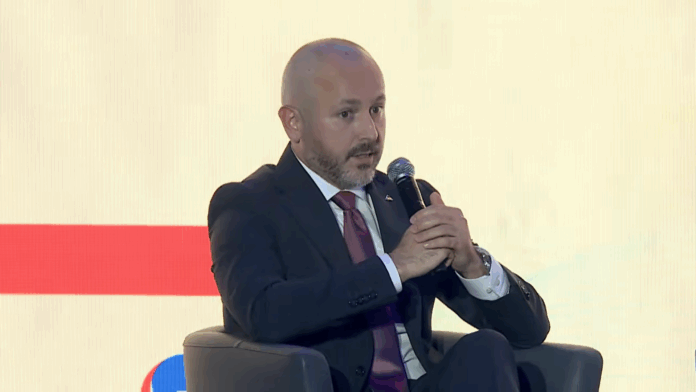
“The greatest satisfaction when you take part in investments is seeing them put into practice,” Ștefăniță Munteanu, Chairman of Transelectrica’s Executive Board said during the Energy for Romania event, organised by Electrica.
“We are about to start construction. We have all the necessary documents, including building permits. This line is being built, and it is happening. It will be ready within 24 months,” the Transelectrica executive stated.
The project is part of the company’s broader transmission network development programme, which involves investments of more than 2 billion euros over the next ten years. Munteanu noted that the plan is regularly updated to reflect evolving infrastructure needs.
He also pointed out that all of Transelectrica’s major transmission line projects have been awarded and are at various stages of implementation.
“Some are already under construction, and we are closing the 400 kV transmission ring, including the Gădălin–Suceava section, for which we are awaiting the building permit,” he explained.
In the Banat region, all project sections are currently under construction, while another major investment is the Alba Iulia substation. Describing it as a particularly challenging undertaking, Munteanu highlighted its complexity and digital infrastructure.
“It is a difficult, complex project, a very complex one – a digital substation. It has a contractor, and work is underway,” he said.
Munteanu also addressed the challenges faced by Romania’s electricity transmission system during a period of exceptional pressure, following the temporary withdrawal from operation of Cernavodă Nuclear Power Plant’s Units 1 and 2.
He said that the simultaneous absence of the two units from the electricity system for three months had not been anticipated even in the most pessimistic scenarios, placing additional pressure on both the transmission and distribution networks.
“We have come through a so-called emergency period, and Transelectrica has risen to the challenge. Even the darkest scenarios did not envisage Units 1 and 2 at Cernavodă being out of the system for three months. The entire pressure was transferred to the grid – both the transmission grid and the distribution grid,” Munteanu said.
He stressed that the experience demonstrated the ability of transmission and distribution operators to manage significant fluctuations in system demand.
“Transelectrica, my colleagues and everyone working in distribution know how to cope with pressure. Because we are talking about real pressure, driven by the need for electricity, not any other kind of pressure,” he concluded.