
The Architects of Perception and Trust | Editorial Series by The Diplomat Bucharest
In a business environment shaped by rapid technological change, increasingly informed audiences and growing expectations around transparency and credibility, the role of communication has evolved far beyond simply delivering messages. Today, brands are increasingly defined by the trust they build, the experiences they create and the consistency with which they communicate who they are and what they stand for.
This is particularly relevant in the industrial sector, where expertise, accuracy and credibility are essential, but where brands must also find more human and meaningful ways to connect with their audiences.
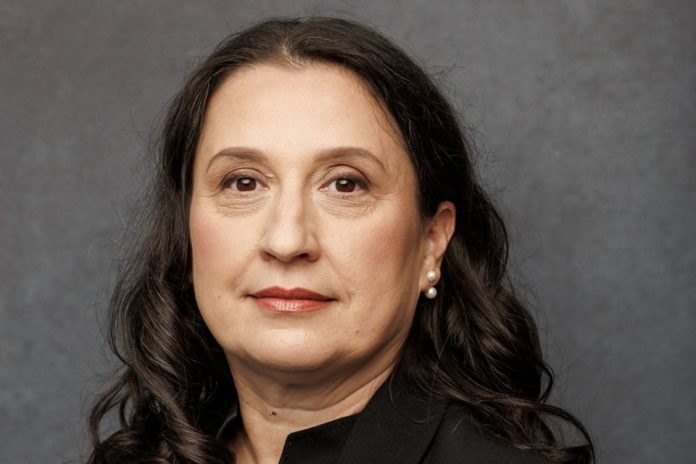
In this interview, Corina Radu, Marketing Director at ALRO, reflects on the changing role of brand communication, the importance of trust and relevance, and the challenges and opportunities facing industrial brands in 2026. Drawing on her experience in marketing, communication and ALRO’s recent rebranding journey, she shares her perspective on how companies can turn expertise into meaningful stories, align internal culture with external perception and build stronger connections with customers, partners, employees and communities.
How would you describe the biggest changes in brand communication over the past years?
Brand communication has become much more demanding in recent years, largely because audiences are better informed and more selective about the brands they trust. From an industrial marketing perspective, this is even more important. You’re speaking to people who know the industry, so you need to be technically accurate – there’s very little room for mistakes or exaggerated claims. Credibility is built over time, but it can also be lost very quickly.
But being technically correct is no longer enough. You also need to understand what truly differentiates you from the competition and communicate it in a clear and more human way. After all, even in B2B, you’re still communicating with people.
What do you believe will define successful brand communication strategies in 2026?
I think success in 2026 will come down to relevance – being able to stand out and say something meaningful in an increasingly crowded communication space. We are already at a point where everyone can produce more content, faster, especially with AI. So, I don’t think the advantage will come from simply communicating more. If anything, it will come from being more selective – knowing what is worth saying, to whom, and at what moment.
For industrial brands in particular, I think there is a real opportunity to turn expertise into something valuable for the audience. We have access to a lot of knowledge inside our company, but the challenge is how we translate that into communication that people actually want to engage with, rather than simply putting more technical information into the market.
In your opinion, how has consumer trust toward brands evolved recently?
Consumer trust has become much more experience-driven. People no longer form an opinion about a company only from what it says, but from every interaction they have with the brand.
Being involved in the development of ALRO’s Marketing Department and in the rebranding process made me see this very clearly. For example, ALRO’s updated rebranding was not simply about changing the visual identity, but about creating a more coherent way of presenting the company and making sure that the brand better reflected who we are today, a forward-looking company that is better positioned to serve modern business needs without losing sight of our roots. It also showed me how much consistency matters when you want people to recognize a company and understand what it stands for.
I noticed this especially at international trade fairs and industry events, where you can immediately see the difference between a company that simply has a presence and one that has built a strong and recognizable brand around itself. A clear identity helps people remember you and gives more strength to everything you communicate.
But what really builds trust is what comes afterwards: the way the company presents itself, the quality of the interaction, the professionalism of the team and the overall experience customers and partners have with the business. So today, a brand is increasingly defined by the impression it leaves at every point of contact, rather than simply by the messages it communicates.
What are the top three priorities for brand communication teams in 2026?
Considering that we have recently gone through a rebranding process, from my point of view one of the main priorities is ensuring that the new identity is fully understood, both internally and externally. ALRO’s rebranding reflects our enhanced focus on cutting-edge technology and innovation, allowing us to offer more efficient and customized aluminium solutions tailored to specific client needs. Brand communication needs to go beyond a new visual identity and clearly express what the company is today, what it stands for, and where it is heading.
Secondly, I would say the internal alignment, because there is no coherent external message without a coherent internal understanding and here the communication teams can prove best that alignment ensures that communication reflects real decisions.
Last but not least, making the brand relevant to people is equally important. We need to connect our corporate strategy and industrial expertise with the stories of our employees, customers, partners and communities. It’s not only about explaining what we produce, but about showing the passion, expertise and commitment behind it, and the value we create together.
How should communication teams demonstrate their value to business leadership?
Communication teams play an important role in today’s organizations, as we don’t simply support the business, we help it succeed, by creating value, managing risks and improving long-term competitiveness. We live in a rapidly changing world, this means lots of challenges, so effective communication is about building trust, but also about protecting it, which is essential for long-term success. For me, this means anticipating reputational risks and helping people better understand the company’s role and contribution.
In the aluminium industry, this is especially important because we also need to communicate our contribution to economic development, sustainability, industrial resilience, strategic autonomy and also to reinforce industrial innovation.
Which communication channels are currently the most effective for building brand equity?
For me the most effective approach is a mix of channels that combines reach with credibility. LinkedIn is particularly important in B2B and industrial communication because it allows us to engage directly with customers, industry experts, policymakers, employees and potential talents.
Corporate channels remain particularly important. I mentioned ALRO’s rebranding, where redesigning ALRO’s website was an important part of the process. A well-structured corporate website, where one can find all the reliable information can also help build credibility.
But I like people and I always come back to people. More than anything, I like working with people, and I truly believe employees can be some of our very powerful brand ambassadors – people trust people, and employees can bring a more authentic voice to the company.
For me, it’s less about being everywhere and more about being consistent and credible.
What initially attracted you to a career in communication profession?
My involvement in communication came as a natural extension of marketing. As a Marketing Director, I realized very quickly that the two go hand in hand and, in many situations, are difficult to separate. You can have a strong strategy, a strong product or a strong brand, but the way you communicate them has a major influence on how they are ultimately understood and perceived.
That is what attracted me most to communication: its ability to shape perceptions, build trust and create stronger relationships between a company and the people around it, whether we are talking about customers, partners, employees or communities.
What is the biggest lesson you’ve learned working in communication?
The biggest lesson I’ve learned throughout my career is related to trust that is built over time. And again, I come back to people. When you have the right people, the right team around you and you don’t just speak, but also listen, then the best solutions emerge. For me, this is the key to good communication.
What keeps you inspired in your everyday job?
I’ll say it again: people, teams. In communication, as well as in marketing, beyond digitalization, the modern, highly-efficient tools we can use to make our work more efficient, I truly believe that people are still “the heart of success”. Communication gives me the opportunity to constantly discover new stories, perspectives and achievements across the company. I also find it very rewarding to see how our brand is evolving and to be part of that journey. Knowing that our work can strengthen the connection between our people, our company and the world around us gives me a real sense of purpose.
If you could change aspects in the communication patterns today, what would it be?
If I could change one thing, I would slow communication down a little. Today, we are often under pressure to react immediately, but good communication needs time to listen, understand and provide context. For me, meaningful communication is not about being the fastest, but about being relevant and having the proper message.