
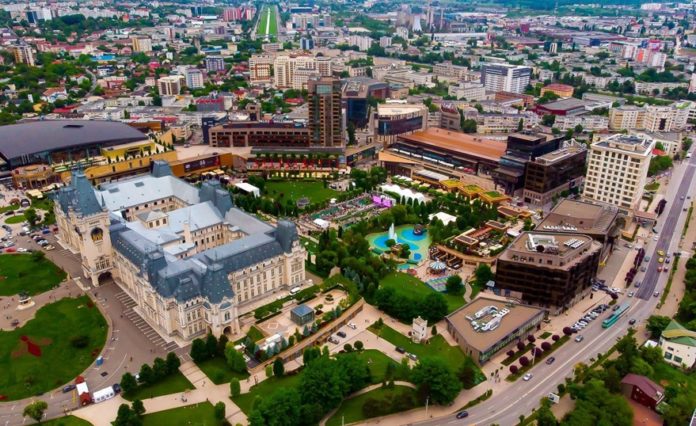
IULIUS Company is consolidating its development strategy through a series of ambitious projects designed to harness the potential of urban areas and create new attraction centers for the local communities. From reconverting former industrial sites and revitalizing already well-established destinations to expanding convenience retail concepts, the company proposes an integrated approach to development, where retail and office space, green areas and facilities dedicated to communities complement each other. The initiatives reflecting this vision include RIVUS Cluj-Napoca, the urban regeneration project for Constanța, the remodeling of Palas Iași, and the opening of Family Market Tomești, a new convenience project in the metropolitan area of Iași City.
“The new generation of projects we are developing are not just standalone real estate investments, but rather dynamic parts of their cities, playing a social, economic, architectural, and urbanistic role. It is precisely from this perspective that we have also evolved in terms of know-how, through partnerships with some of the world’s leading architecture firms, including Foster + Partners, whose vision we are implementing in Palas Iași and in the urban reconversion project in Constanța, and UNStudio, with whom we are working on the concept for RIVUS Cluj-Napoca. They have a certain level of expertise in complex projects that have truly shaped the evolution of a city, transformed underdeveloped areas into attraction hubs, and reset the urban dynamics and esthetics. We are convinced that our ongoing projects’ mission also integrates these aspects, and their transformative capacity carries both the experience acquired from our previously completed projects, and that of the architects and financing institutions that are part of and believe in these projects,” said Raluca Munteanu, Development Manager for Iulius.
This approach builds on the premise that urban development must go beyond the limits of the actual real-estate development and generate positive changes in the lives of communities. Therefore, these projects are geared towards revitalizing the areas where they are located, creating contexts for social interaction, and bringing long-term benefits. Through its current portfolio, IULIUS seeks to integrate these goals in a unified vision, based on urban regeneration, functional diversity, and responsibility toward the built environment.
Investments that transform cities and shape new urban landmarks
IULIUS holds a built portfolio with an estimated value upwards of €2.2 bn and ongoing investments upwards of €1.3 bn in Iași, Cluj-Napoca, Timișoara, and Suceava. The company aims to replicate the model of the developments that have transformed underutilized urban areas into attractive destinations for communities and investors alike.
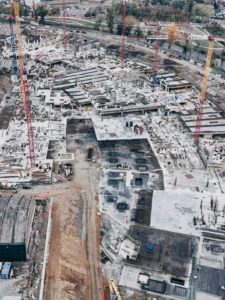
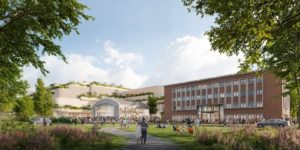
One of the most ambitious projects in this new generation is RIVUS Cluj-Napoca, an investment estimated upwards of €550 million, transforming the former Carbochim industrial platform into a large-scale mixed-use project. This development undertaken by IULIUS and Atterbury Europe, based on a concept by the international architecture firm UNStudio, leverages the industrial identity of the site and seeks to reconnect the area with the city and Someș River. With 142,000 square meters of leasable retail space, 400-plus stores, and an urban garden spanning 52,000 square meters, the project will also integrate a major cultural component – and mark a unique initiative in Romania – by transforming the former arcade hall into a center dedicated to performing arts.
Another large-scale intervention is proposed for the former site of the Oil Terminal platform in Constanța. With an investment estimated upwards of €800 million, the project proposes the reconversion of a 38 hectare area and represents one of the most complex urban regeneration undertakings in Romania. Before starting the actual development, IULIUS also undertook and is now carrying out an extensive soil bioremediation process, estimated at €29 million, in order to restore an area with significant urban development potential to the city. The architecture concept is designed in collaboration with Foster + Partners and seeks to create a new urban destination, attuned to the identity and needs of Constanța City and including various components: cultural, educational, and retail venues, public utility uses and services, entertainment, sports and leisure facilities, park and botanical garden, amphitheater, art and business event halls, entertainment centers, office premises, as well as pedestrian, bicycle, and motor vehicle connectivity and mobility solutions.
However, this new investment phase does entail just brand new developments. IULIUS is also adapting its well-established projects to the new consumer behaviors and public expectations. In Palas Iași, the company is carrying out an investment of approximately €80 million in an extensive remodeling process that was also based on a concept by Foster + Partners. The project will add more than 16,000 square meters of leasable retail space, increasing the total retail area upwards of 80,000 square meters. Beyond expanding the commercial offer, the intervention seeks to diversify experiences, integrate new entertainment concepts, reconfigure the public areas, and expand the green areas and spaces for socializing. The goal is for Palas to remain a relevant destination for the following generations, maintaining its role as urban landmark and regional business hub.
In parallel with the large-scale projects, the company is also developing concepts that are adapted to the everyday needs of local communities. These include the upcoming opening of Family Market Tomești in the metropolitan area of Iași, a €28 million investment marking the expansion of this convenience retail model. With an area of approximately 13,000 square meters, the project addresses the demand for services, shopping, and facilities that are accessible close to home, in a format that focuses on convenience and integration in the life of the community.
Although they differ in terms of scale and uses, the four projects share a common denominator: the development of spaces that go beyond the boundaries of traditional real-estate. Whether they entail the reconversion of industrial sites, upgrading well-established destinations or creating convenience centers, the investments begin by understanding the specifics of each city and by engaging in dialogue with the communities.
This is, in fact, the direction that defines the new generation of IULIUS projects: developing concepts that are tailored to the cities where they are built, rather than applying standardized development formulas. In a context where the competitiveness of regional cities is increasingly reliant on their attractiveness, infrastructure, and quality of life, such investments can become drivers of urban transformation, with effects that extend far beyond the boundaries of each project.