
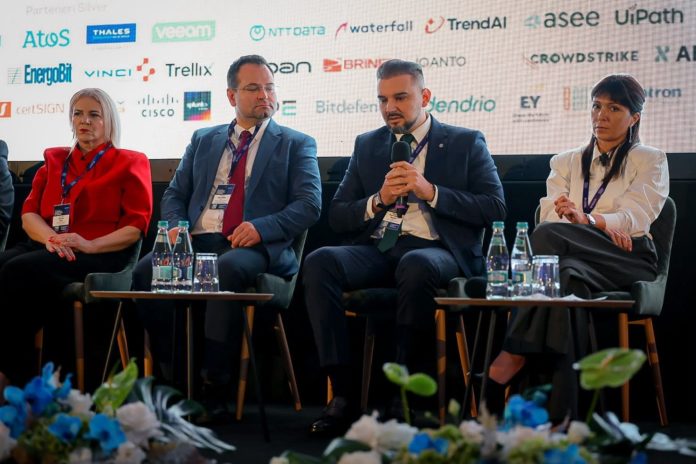
The shortage of skilled professionals and the failure of university education to keep pace with the current needs of the energy sector are major challenges for companies across the industry, including electricity distribution operators, according to Paul Negrea, Corporate Affairs Director at Distribuție Energie Electrică România (DEER).
Speaking at the Energy Cybersecurity Forum in Cluj-Napoca, Negrea said that although graduates from specialised universities have a basic technical knowledge, the skills acquired during their studies are not sufficiently aligned with the rapid transformation of the energy and IT sectors.
“Certainly, when it comes to technical knowledge, graduates have a foundation. However, the component involving adaptation to market needs is almost entirely missing. We are currently going through an energy transition, yet nobody has taken into account the need to prepare people, starting at university, to lead this energy transition,” Paul Negrea said.
Skills shortages are contributing to delays in renewable energy projects
The DEER representative warned that the shortage of qualified professionals is affecting both energy companies and IT businesses, at a time when the energy transition requires the rapid development of new technologies and generation capacities.
“There are many companies in this room, both from IT and the energy sector, where specialists are simply in extremely short supply. We are talking about renewable energy generation projects that lack the necessary specialists. This is one of the reasons behind delays in renewable energy projects,” he said.
According to Negrea, the problem is particularly visible in areas such as renewable energy generation and energy storage, where companies need specialised skills that are not adequately covered by current university programmes.
“University specialisations have largely remained the same and no longer necessarily meet today’s requirements. There is a shortage of specialists in the renewable energy sector, across the entire spectrum, from energy storage to generation,” the DEER executive explained.
DEER invests at least one year in training young employees but risks losing them
Paul Negrea, who also oversees human resources activities, said that distribution operators are forced to invest considerable time and resources in training newly recruited employees.
“Within distribution operators, we rely on the same people, who must adapt to new regulations and the changing direction of the market. When young people join our company, I believe we invest at least one year in training them. And quite often, we end up losing them as well,” he said.
He explained that the accelerating pace of technological and regulatory change puts additional pressure on companies, which cannot always afford lengthy employee training periods.
“Often, we simply do not have a year to train a specialist. The pace is extremely fast, and regulations are changing dynamically,” Negrea stressed.