
Škoda Group is targeting a broader and more strategic presence in Romania, as the country prepares to invest heavily in railway infrastructure and public transport modernization. The Czech transport technology company sees opportunities across the rail and urban mobility sectors, with a particular focus on new-generation trains, electric mobility and digital solutions.
Romania is a key market for Škoda Group in South and Eastern Europe, according to Olesea Lachi, Vice President South & East Europe, who says the company wants to build on its existing presence in the country and become a long-term partner for Romanian transport operators and authorities.
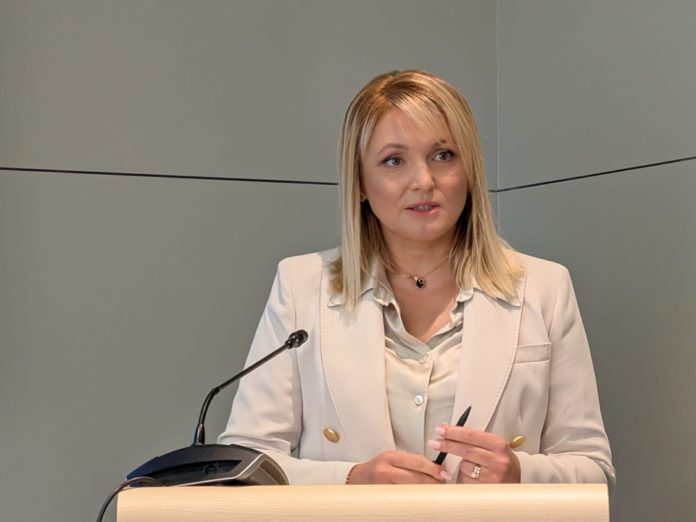
“Romania is a strategic market for Škoda Group. The scale of the railway network, the modernization needs and the availability of European funding create significant opportunities for us. Our ambition is to develop a long-term presence in the country and contribute to the transformation of both rail and urban transport,” said Olesea Lachi, Vice President South & East Europe, Škoda Group during a press meeting.
Romania operates approximately 10,600 km of railway, making it the fourth-largest railway network in the European Union by length.
However, only 38% of the railway network is electrified, compared with an EU average of 57%. Škoda Group sees this gap as an important opportunity for modern rolling-stock technologies, particularly trains capable of operating on both electrified and non-electrified sections.
“The relatively low level of railway electrification makes Romania particularly relevant for technologies that can provide zero-emission mobility without requiring every section of the network to be electrified first. Battery-electric trains can play an important role in this transition,” explained Olesea Lachi.
The company is therefore looking beyond conventional electric trains and is positioning battery-powered rolling stock as one of the technologies that could help Romania modernize regional rail services while infrastructure upgrades continue.
Škoda Group already has a significant presence in Romania’s urban transport market. According to the company’s presentation, its trolleybuses account for around 30% of the market, with 170 vehicles operating or being delivered across Galați, Timișoara, Baia Mare, Cluj-Napoca, Brașov, Târgu Jiu, Ploiești and Mediaș.
The company now wants to leverage this experience to expand into other segments of the Romanian mobility market.
Another factor behind Škoda Group’s interest in Romania is the scale of European funding available for transport modernization.
The company also points to Romania’s geographical position and its role in the TEN-T European transport network. Škoda Group sees this strategic position as another reason to strengthen its presence in the country.
For Škoda Group, Romania is therefore emerging as more than a market for individual tenders: it is a strategic opportunity to expand its presence in South-Eastern Europe and participate in the country’s transition towards a more modern, electrified and integrated transport system.