
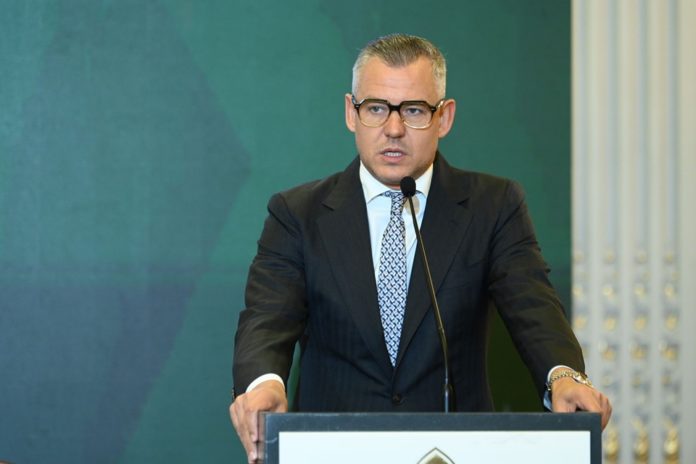
“The EU taxonomy has made it very clear that, in the energy transition, natural gas is considered a transitional fuel, while nuclear energy is clean. In this transition, we need a healthy energy mix consisting of nuclear, natural gas, and renewables. This mix can only work properly if each source plays its role in the transition.
Our common interest is to have a functioning economy, and this is reflected in both energy consumption and the energy mix. To sustain a healthy economy, we need baseload power generation capacities. We need renewables, natural gas, and nuclear — and fortunately, Romania has them all,” said Istvan-Lorant Antal, President of the Committee on Energy in the Romanian Senate, during the Green Energy Conference, organized by The Diplomat-Bucharest.
Key statements:
- In 2008, Romania positioned itself as a pioneer in the renewables sector. That year, Law 220/2008 was introduced, creating a strong appetite among companies to invest in green energy, as Romania was among the first countries to adopt a renewables law with a supportive framework through green certificates. At that time, hundreds of millions of euros were invested.
- That wave has passed. Some investors recovered their investments, others did not. Today, Romania is riding a new wave, called the energy transition. The country has committed to ambitious targets — shutting down fossil-fuel-based generation capacities, including baseload production, and “greening” the system.
- In the last 5–6 years, Romania has closed around 6,000 MW of coal-based capacity. The 430 MW Iernut natural gas power plant is still not operational, though it would greatly help balance the market in Transylvania. Meanwhile, hopes are high that the Mintia plant will start with a capacity of 1,700 MW.
- Romania faces a paradox. Although it is a natural gas producer, the country has not managed to sufficiently connect households to the gas grid nor maximize the use of natural gas in industry.