
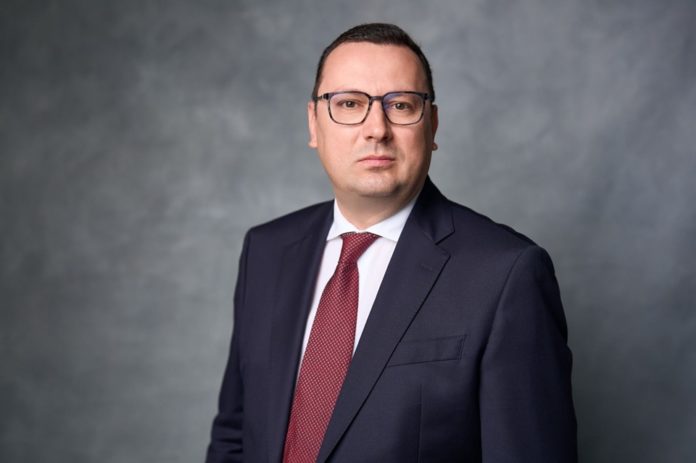
“Romania is in the middle of an investment cycle that has been delayed for two decades and is now arriving all at once. We see 1.5–2 GW of new renewables added in 2026 alone, more than 2 GW of flexible gas capacity in advanced stages, Neptun Deep, the nuclear programme, major grid investments at TSO and DSO levels, and the first serious wave of battery storage. For a company that does engineering and operations across this whole chain, the opportunity is unusually broad,” Andrei Berechet, Chief Commercial Officer at Adrem told The Diplomat-Bucharest.
“The most interesting opportunity, however, is not in any single segment — it is at the interfaces. Connecting renewables to a grid that was not designed for them. Integrating storage into market mechanisms that did not exist five years ago. Bringing data centers as new industrial loads into regions that need them. Romania also has a real chance to position itself as a regional hub in South-Eastern Europe, but that depends on whether we treat interconnections, regulation alignment, and grid digitalization with the same urgency as we treat generation.”
What are the main priorities for Adrem’s commercial strategy in the next few years?
Our commercial strategy is shifting from selling systems to selling outcomes. For three decades Adrem has built its position on SCADA, automation, and EPC for utilities — and we will continue to consolidate that core. What is new is the layer we are building on top: asset performance management, risk-based maintenance, and increasingly cloud-delivered services that allow our clients to buy availability and efficiency rather than equipment.
In concrete terms, there are three priorities. First, expanding our O&M and digital services portfolio into renewables — wind and PV operators now face a 20-to-30-year horizon and need the same discipline that grid operators have applied for years. Second, scaling our role in grid modernization and storage, where Romania has years of catching up to do. Third, deepening partnerships with DSOs and TSOs around platforms that turn operational data into investment and maintenance decisions. That is where the margin and the long-term value sit.
How is the energy sector changing from a business perspective?
The biggest shift is that complexity has become the product. Ten years ago, a utility bought a SCADA system and a substation; today it buys the ability to integrate prosumers exceeding 4 GW, balance variable renewables, manage storage assets, forecast demand from data centers, and report in real time to a regulator. The technical equipment is a fraction of the value — the integration, the data layer, and the long-term service contract are where the business is.
From a commercial perspective this means longer sales cycles, more sophisticated buyers, and contracts that look more like managed services than capex deliveries. It also means consolidation: clients want fewer, deeper partners who can carry a 20-year accountability, not a long list of suppliers. For a player like Adrem, this is structurally favourable — provided we keep investing in the engineering and digital capabilities that justify being chosen for that role.
What opportunities do you see emerging in Romania’s energy and infrastructure market?
Romania is in the middle of an investment cycle that has been delayed for two decades and is now arriving all at once. We see 1.5–2 GW of new renewables added in 2026 alone, more than 2 GW of flexible gas capacity in advanced stages, Neptun Deep, the nuclear programme, major grid investments at TSO and DSO levels, and the first serious wave of battery storage. For a company that does engineering and operations across this whole chain, the opportunity is unusually broad.
The most interesting opportunity, however, is not in any single segment — it is at the interfaces. Connecting renewables to a grid that was not designed for them. Integrating storage into market mechanisms that did not exist five years ago. Bringing data centers as new industrial loads into regions that need them. Romania also has a real chance to position itself as a regional hub in South-Eastern Europe, but that depends on whether we treat interconnections, regulation alignment, and grid digitalization with the same urgency as we treat generation.
What differentiates Adrem from other players in the industry?
Three things, I would say. First, the combination of OT engineering depth and EPC execution under one roof. There are good SCADA integrators and good EPC contractors in this market, but very few who genuinely understand both worlds — and the value today is precisely at the seam between them. Second, three decades of continuity with the Romanian utility sector. The relationships, the institutional memory, the understanding of how a Romanian DSO operates — those are not things you build in a procurement cycle.
Third, and this is where we are investing most heavily now: we are moving from being a vendor to being a long-horizon partner. Risk-based maintenance, asset performance platforms, smart-metering services at the scale of 5 million consumers — these are commitments measured in decades, not delivery milestones. Anyone can sell a box. Very few can take responsibility for what that box does over 20 years, on critical infrastructure, with auditable performance. That is the territory we want to own.
What role do smart technologies and automation play in Adrem’s projects?
Smart technologies are no longer an add-on layer — they are the project. The integrated asset management platform we deployed together with DEER and DEO is a good illustration: it consolidates SCADA, SAP, GIS, ERP and operational systems into a single architecture managing over 500,000 grid assets, and it has delivered measurable results — SAIDI reductions of up to 30%, unplanned failures down 20–40%, operational cost reductions of 10–20%, with a payback period in three to five years. That is what automation and intelligent data integration look like when they meet a business case.
The principle behind it is simple: in a system with 80% renewables, prosumers, storage and dynamic tariffs, you cannot operate the grid manually anymore. IoT, real-time data, predictive analytics, and increasingly AI for forecasting and planning, are not optional — they are the precondition for the new market design. We approach every project from this angle: what data does it generate, who consumes it, and what decisions does it enable in five and ten years.
Which technological trends do you believe will have the biggest impact over the next decade?
Four trends I would single out. First, grid digitalization and the move toward truly observable, controllable networks — without this, none of the rest works. Second, storage becoming a mainstream system asset rather than a niche, blending battery, hybrid renewable-plus-storage projects, and eventually longer-duration solutions. Third, the maturation of AI in operations: not the hype cycle, but the boring, valuable applications in forecasting, predictive maintenance, network planning, and permitting acceleration. Fourth, the convergence of electricity with data infrastructure, where data centers become some of the most important new loads — and, interestingly, some of the most demanding customers for clean and reliable supply.
Beneath all of these, there is a deeper trend that does not get enough attention: the workforce question. Competent engineers capable of maintaining a wind farm, a substation, or a digital platform are not easy to find anywhere in Europe. Whoever solves the human capital equation — through training, workforce management tools, and attractive working environments — will have a structural advantage. We treat it as a strategic priority, not an HR topic.
How does Adrem approach collaboration with clients and strategic partners?
Our model has always been long-cycle, not transactional. The clients we are proudest of — major DSOs, TSOs, large renewable developers — are relationships measured in years, sometimes decades. That changes how you work. You invest in understanding their five-year roadmap, not just the current tender. You bring problems to them before they become specifications. You accept accountability for outcomes that extend well past your contractual obligations.
With strategic partners — technology vendors, OEMs, engineering specialists — the principle is similar: we look for partners whose roadmaps are compatible with the long horizon we commit to. In an industry where a substation lives 40 years and a digital platform must be supported for two decades, picking the right partners is itself a core capability. We are not interested in transactional partnerships built around a single project — we want ecosystems where everyone has a reason to stay invested across multiple cycles.
What industries are currently driving the highest demand for your services?
The clearest demand comes from three directions. The first and largest is the distribution and transmission grid operators — modernization programmes, smart metering rollouts, asset management platforms, automation of substations. This is the steady, structural backbone of our business and it is intensifying as the system adapts to renewables and prosumers.
The second is renewable energy developers and operators — both in EPC for grid connection infrastructure and, increasingly, in long-term operations and asset performance services. The wind park grid connection we delivered with PPC (140 MW) in the Vaslui area is a representative example. The third is the water and sewage sector, which is often overlooked in energy conversations but is a major industrial electricity consumer and is digitalizing rapidly — automation, network monitoring, loss detection, consumption analytics.
Beyond these, we are watching the emerging demand from data center developers and from large industrial consumers building their own behind-the-meter generation and storage. These will be increasingly significant clients in the next three to five years.
What trends should businesses pay close attention to right now?
Three I would highlight, all undervalued. First, the speed at which grid constraints are becoming the binding constraint on the energy transition — for renewable developers, industrial investors, even for cities planning electrification. If your business plan assumes grid capacity will be there when you need it, stress-test that assumption hard. Second, the structural shift from energy cost to energy flexibility as the competitive variable. Companies that can shift load, store, and respond to dynamic tariffs will pay materially less than those that cannot — and the gap will widen.
Third, the strategic significance of data — operational data, asset data, market data. Whoever owns and can exploit this data layer will have leverage over the entire value chain. This is true for operators, but also for any industrial consumer with significant energy exposure. The companies winning the next decade will not necessarily be those with the cheapest energy, but those who have built the analytical and operational capacity to use energy intelligently.
Looking ahead, what excites you most about the future of the industry?
Honestly, after two decades of incremental change, this industry is finally undergoing a real transformation — and Romanian engineering has a serious seat at the table. We are no longer a market that imports solutions developed elsewhere. We are building integrated platforms that operate at a scale comparable to anywhere in Europe, we are running EPC projects that connect hundreds of megawatts of new clean energy to the grid, and we are doing it with teams trained in Romania.
What excites me most, though, is the intellectual challenge. Operating an electricity system with 80% variable renewables, prosumers everywhere, dynamic prices, batteries, data centers, EVs, and cross-border flows — all in real time — is one of the most complex engineering problems humanity has taken on. And we get to be part of solving it. I am optimistic because Romanian engineers have a particular talent for what I would call good speculative intelligence: choosing the right path through a maze of possibilities. The next decade will reward exactly that.