
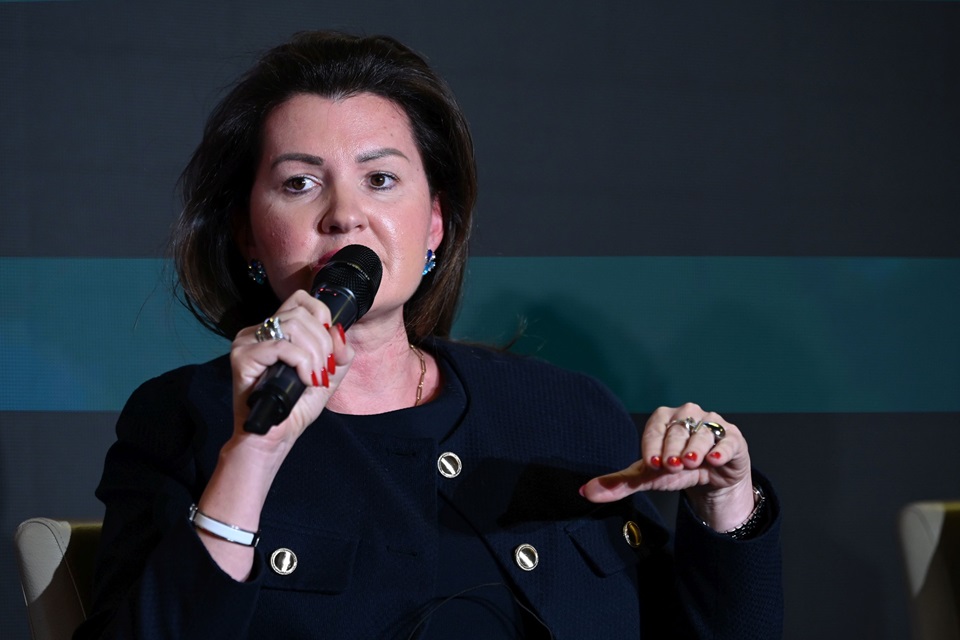
“Two things are very important for us in Teleperformance but should be important for all the organizations. Putting a culture in place takes authentic leadership. What is authentic leadership? We have a lot of leaders today. Do we know ourselves? Do we know the patterns? Being a leader is really knowing yourself. We need to understand ourselves, being vulnerable, accepting failure.
The second important thing is psychological safety. Most of you may be familiar with Project Aristotle (by Google). They were monitoring a lot of teams and following what they were doing, and they concluded that teams feeling psychological safety had 35 percent more chances to deliver successful projects at the end.
Culture is not a one-day job, it’s a continuous process and requires hard work from everyone in the organization. It starts with leadership and making sure that the environment created by the leader is where people feel safe to fail, to speak and to bring new ideas,” Charlotte Foucteau, CEO Teleperformance Greece said during People Empowering Business Forum organized by The Diplomat-Bucharest.
“In Greece and Romania, we have 17,000 people from all the generations, from boomers to gen Z. What we are trying to do now in the company is to implement different methods that we adapt to each generation. That’s a change we need to take as leaders. There is no one size fits all approach, we need to adapt.
One of the things we have been doing is changing from the annual evaluation that I’m personally against. I think it’s just one emotional moment at the end of the year where we’re going to tell them everything about their year. It’s important, but that’s not the moment to give feedback. What makes people grow is feedback. So, take time as leaders and do that on the spot.
If you have a culture where people are shy to talk or ask a question, what kind of evaluation are you going to do?
I believe we need to bring more on the spot feedback. Then, we need to introduce different key performance indicators. Of course we need to keep some basic indicators, but let’s introduce some new metrics. Do you care about the mental health of your team? That should be on the list. Is your team engaged with you as a leader? Let’s think a little bit out of the box, let’s improve the frequency in which we actually give feedback to the team, and let’s be open.”