
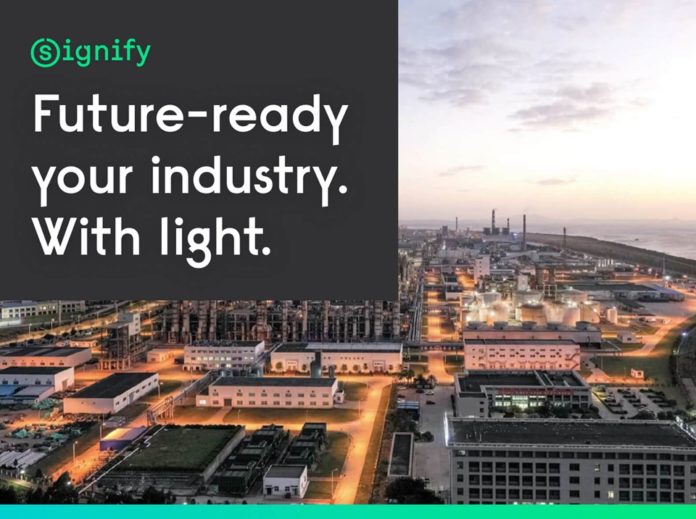
The modern industrial and logistics sectors in Central and Eastern Europe are navigating a highly complex macroeconomic environment. Globally, industry consumes 24% of total energy[i], and in an era of volatile utility prices, energy efficiency has shifted from a corporate social responsibility initiative to an operational imperative. Simultaneously, facility and plant managers grapple with continuous operational risks. Industry data reveals that the average manufacturing plant loses between 5% and 20% of its annual productivity to unplanned downtime[ii] – an issue that 90% of manufacturers rank as their top operational threat. Faced with persistent skilled labor shortages and an aging workforce, industrial operators must fundamentally rethink their infrastructure strategy to secure long-term competitiveness.
In this high-stakes landscape, traditional, static property assets are quickly becoming liabilities. Forward-thinking developers and industrial tenants are discovering that one of the fastest, most financially viable levers for digital transformation is already integrated into their buildings: the lighting infrastructure. By transitioning from conventional installations to intelligent, connected lighting networks, enterprises can seamlessly bridge part of the gap between aggressive decarbonization targets and day-to-day operational excellence.
The power of industrial intelligence with Signify Interact
At the forefront of this industrial shift is Signify Interact, a cloud-based connected lighting platform that turns standard illumination into a data-driven backbone for smart factories and warehouse facilities. Rather than treating lighting as a fixed utility cost, the Interact system elevates it to an active asset capable of optimizing lighting-related energy consumption, maintenance cost, and improving human performance.
Connected lighting unlocks deep energy and carbon reductions
When combined with high-performance LED luminaires, Signify Interact cuts lighting energy consumption by up to 80%[iii]. For large-scale industrial plants and logistics hubs, this directly accelerates Net Zero goals and delivers an immediate, positive impact on corporate EBITDA.
Predictive maintenance eliminates downtime risks
Instead of waiting for a luminaire to fail – which disrupts continuous processes and introduces safety risks – Interact provides real-time asset health monitoring and automated diagnostics delivered straight to smartphones. This allows engineering teams to shift from reactive maintenance to a predictive framework, eliminating surprises and ensuring continuous uptime on the factory floor.
Automated CSRD reporting strengthens ESG compliance
Gathering precise data for ESG compliance remains a structural headache, with 83% of companies finding current CSRD reporting frameworks highly challenging[iv]. Interact solves this data gap by automating the collection of granular, real-time energy dashboards, offering institutional investors and auditors verified insights at the touch of a button.
“We often talk about digital transformation in terms of software and AI, but one of the most powerful sensor networks in any facility is already above our heads. With Interact Industry, lighting becomes a real‑time data platform that helps you optimize operations and stay agile in a fast‑moving market.” – Silviu Bulzan, Sales Leader Office & Industry SEE at Signify.
Navigating the EPBD regulatory countdown in real estate
For institutional real estate owners and industrial operators across the SEE and CEE regions, compliance is no longer a distant target, it is a legal countdown. The revised Energy Performance of Buildings Directive (EPBD) introduces strict decarbonization milestones across the European Union. By 2028-2030, automatic lighting controls featuring mandatory occupancy detection and daylight harvesting will become legally required across most industrial and non-residential sites.
The primary operational challenge for facility managers is achieving full compliance without paralyzing manufacturing lines or warehouse logistics with complex, intrusive rewiring. This is where Signify’s wireless innovation excels. As a highly scalable and cost-efficient retrofit solution, Interact utilizes a Zigbee mesh network. It integrates into existing Building Automation and Control Systems (BACS) via BACnet or cloud-based APIs – requiring no extra cabling or structural drilling, thereby ensuring zero disruption to ongoing industrial processes.
“Europe’s new energy standards are accelerating the shift toward smarter, more resilient industrial operations. With the right strategy, compliance becomes a competitive advantage. At Signify, we turn lighting into a digital platform that prepares your facility for the future.” – Silviu Bulzan, Sales Leader Office & Industry SEE at Signify.
Proven success in the field
The tangible financial and sustainable impact of this technology is already proven across major manufacturing and heavy industry facilities:
- Kronospan – by deploying the Signify Interact smart LED lighting system, the company achieved a staggering 72% reduction in lighting electricity consumption[v]. This strategic upgrade resulted in €1.72M in direct energy cost savings and a reduction of nearly 10,000 tons of CO₂ over a 10-year period.
- Pilkington – the glass manufacturer transformed its production asset into a connected factory by utilizing Interact as an intelligent data network. The deployment unlocked deep operational visibility and massive energy reductions, achieved with zero disruption to active production during the entire installation process.
Human‑centric lighting for safety, ergonomics, and productivity
Beyond data points and energy graphs, a smart facility infrastructure directly protects a company’s most critical asset: its human capital. Poor workspace visibility drastically increases manual errors and safety incidents, which can cost an average of €40,000 per non-fatal manufacturing case.
Furthermore, as the industrial workforce ages, ergonomics become vital; a worker over the age of 40 typically requires nearly twice as much light as a 20-year-old to maintain identical visual performance[vi]. Boosting workspace lux levels not only enhances employee well-being but can also elevate task performance and productivity by up to 30% while reducing production errors and safety incidents by over 50%.
Future-proof your facility today
The structural transition toward smart manufacturing and sustainable logistics assets requires strategic partners who know how to translate abstract ESG mandates into granular, high-ROI business cases.
To explore how to replicate these operational savings, automate your environmental reporting, and future-proof your property infrastructure against upcoming EPBD deadlines, connect directly with Silviu Bulzan, Sales Leader Office & Industry SEE at Signify, to design your next-generation facility strategy.
Ready to transform your industrial infrastructure? Discover more here: https://www.signify.com/ro-ro/future-ready-industry-smart-lighting
[i] https://ourworldindata.org/ghg-emissions-by-sector.
[ii] https://www.twi-institute.com/manufacturing-downtime/
[iii] When combined with energy-efficient LED luminaires. Compared to energy consumption of conventional lighting without Interact.
[iv] https://www.esgtoday.com/83-of-companies-say-collecting-accurate-data-for-csrd-reporting-requirements-will-be-a-challenge-workiva-survey/
[v] https://www.assets.signify.com/is/content/Signify/Assets/interact/global/20240226-interact-kronospan-casestudy-en.pdf
[vi] Safety Benefits of Lighting in Industrial Settings, Viner 2010.