
As Romania faces the challenges of accelerating its energy transition, modernising critical infrastructure and strengthening industrial competitiveness, Veolia is positioning itself as a key partner in delivering sustainable, long-term solutions. With nearly one billion euros in cumulative investments expected by the end of 2026, the company is focused on developing integrated water and energy services, expanding innovative geothermal solutions, accelerating digitalisation and improving resource efficiency.
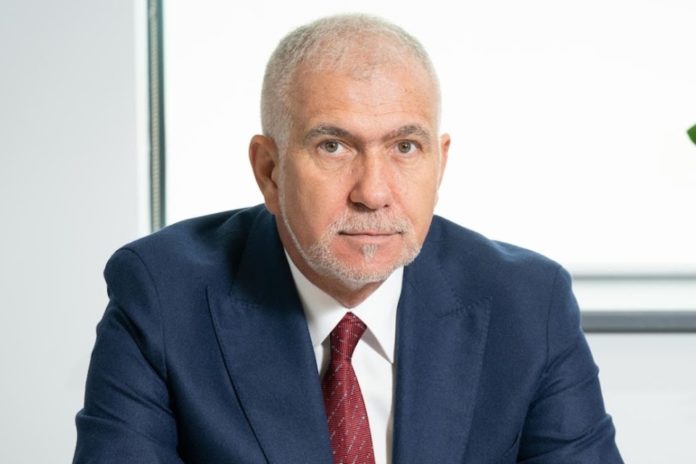
In this interview with The Diplomat-Bucharest, Mădălin Mihailovici, CEO of Veolia Romania, discusses the company’s strategic priorities for 2027 and beyond, its investment plans, the growing role of public-private partnerships and the opportunities emerging across Romania’s industrial landscape. He also shares his vision for the company’s contribution to Romania’s green transition and its ambition to become a leading provider of integrated water, energy and circular economy solutions by 2030.
What are Veolia Romania’s main strategic priorities for 2027, and which business segments will drive the company’s growth over the next three to five years?
Romania’s energy transition will not be driven by renewable electricity alone. One of the biggest opportunities is to transform how we heat and cool buildings, recover residual energy from existing infrastructure and make better use of local resources. This represents a significant area of growth for Veolia over the coming years.
Through GeoExchange, we are already demonstrating the potential of geothermal heating and cooling in Romania, offering residential and commercial developments an energy-efficient and commercially viable alternative to conventional systems. The next step is to extend this approach beyond individual buildings. Veolia’s Ecothermal Grid concept combines geothermal energy, industrial residual heat and other locally available resources in integrated heating and cooling networks. For Romania, this could open up new possibilities for modernising district heating, reducing dependence on fossil fuels and recovering energy that would otherwise be lost.
Water remains an equally important strategic priority. Climate change is increasing pressure on water resources and urban infrastructure, making resilience and more efficient resource management essential. Alongside network modernisation, we see opportunities in industrial water treatment, decentralised wastewater solutions and technologies that help businesses reduce water consumption.
Over the next three to five years, our ambition is to turn these opportunities into projects that demonstrate how more intelligent resource management can deliver lasting economic value.
What is Veolia Romania’s investment budget for 2027, and what is the total value of the investment pipeline planned for 2027–2030? Which major projects will receive priority funding?
Infrastructure cannot be planned around annual budgets when the assets we build today must serve cities and industries for decades. This requires continuity, long-term planning and financial discipline.
By the end of 2026, Veolia Romania’s cumulative investments since 2000 are expected to approach €1 billion. Approximately €780 million has been directed towards water and wastewater infrastructure, with further investments in operational modernisation, digitalisation, energy efficiency and environmental projects. This sustained commitment has allowed us to move beyond simply maintaining infrastructure towards improving its performance and extending its useful life.
Our most significant long-term commitment is Bucharest’s new drinking and waste water infrastructure programme, worth more than €520 million through 2037. It addresses a challenge shared by many European cities: networks designed for a different urban and climatic reality must now accommodate continued development and increasingly unpredictable weather. The programme will prioritise network modernisation, wastewater infrastructure and measures to improve the city’s ability to manage intense rainfall.
Looking ahead, we will continue to favour investments that deliver measurable improvements in performance and reduce long-term operating costs. In infrastructure, the most expensive decision is often to postpone investment until a problem becomes unavoidable. The real value lies in anticipating future needs and making sure today’s capital expenditure does not become tomorrow’s operational burden.
Which major projects are currently underway in Romania, and are you preparing any new investments, strategic partnerships or acquisitions that you expect to announce in the coming months?
We are looking closely at how Romania’s investment landscape is changing. The expansion of the defence industry, growing interest in data centres and the modernisation of existing industrial platforms are creating demand for infrastructure that is more sophisticated, resource-efficient and reliable. For investors, access to energy and water, together with the ability to manage operating costs, is increasingly becoming a factor in deciding where and how to develop.
We see opportunities in decentralised energy and water treatment systems, particularly in industrial water recycling and reuse, where reducing dependence on freshwater resources can bring both economic and environmental benefits. Our focus is on bringing technologies and business models already proven in other European markets to Romania, helping industrial customers improve resource efficiency while concentrating their capital and expertise on their core business.
What are the most urgent investments needed to support industrial development, and what role can Veolia play in delivering them?
Romania needs to move beyond financing infrastructure primarily on the basis of construction costs. For industrial development, what matters just as much is how much that infrastructure will cost to operate, maintain and modernise over the next 20 or 30 years. A lower initial investment can prove considerably more expensive over time.
This calls for a different approach to project development and financing. Well-structured public-private partnerships can help accelerate investment, mobilise specialist expertise and allocate risks more effectively, while linking payments to measurable performance. Veolia’s experience in operating essential infrastructure under long-term contracts shows the value of this model: the operator has a direct incentive to control costs, maintain service quality, keep essential services affordable, and anticipate future investment needs.
For Romania, the priority should be to create the conditions for more bankable projects, with clear responsibilities, realistic operating assumptions and performance standards that remain relevant long after construction is completed.
Are you currently in discussions with industrial investors, manufacturers or data centre developers to provide integrated water and energy solutions? Can you share details about potential projects or partnerships?
We are already working with industries where energy efficiency, reliable cooling and environmental performance are critical to business operations. One example is a major semiconductor research and development facility in Romania, where Veolia’s geothermal solution provides continuous cooling and recovers residual and excess energy, reducing energy consumption by up to 50% and avoiding approximately 260 tonnes of CO₂ emissions annually.
The significance of this project goes beyond the technology itself. It shows how solutions already deployed by Veolia internationally, including in projects for companies such as Intel, Samsung, Google and AWS, can help Romania attract and support increasingly sophisticated industrial investments. Whether through advanced water treatment, energy optimisation, or resource recovery, the objective is the same: improve operational efficiency, reduce long-term costs, and meet increasingly stringent environmental requirements.
How significant will energy production and storage become within Veolia Romania’s business strategy? What are your plans regarding photovoltaic projects, battery storage, geothermal energy and biogas, and do you have specific investment or capacity targets?
A defining feature of Veolia’s approach is the development of an integrated energy mix that makes the most of locally available resources, including energy that would otherwise go to waste. Rather than relying on individual technologies, we combine renewable generation, energy recovery and storage to create systems that are more efficient, resilient and economically sustainable.
This approach is already taking shape in Romania. In our local projects, photovoltaic generation complements geothermal heating and cooling by supplying electricity to heat pumps, while storage helps balance production and consumption. At Crivina, one of Bucharest’s drinking water treatment and production plants, we harness the energy potential of water infrastructure through micro-hydropower. Meanwhile, biogas cogeneration at our main wastewater treatment facility, in Glina, enables us to produce electricity and heat from resources recovered during the treatment process.
How much are you investing in digitalisation, smart metering, automation and AI-based solutions, and what impact do you expect these technologies to have on operational efficiency and financial performance?
Digitalisation is fundamentally changing how we manage infrastructure and make investment decisions. By connecting operational data across water and energy services, we can anticipate demand, optimise production, detect inefficiencies earlier and allocate resources more effectively.
Over the past 26 years, Veolia Romania has invested over €43 million in digital technologies. Drinking water production and wastewater treatment plants have been modernised and fully automated, and more than 144,000 smart meters have been installed in Bucharest. Together with sustained infrastructure investment, these developments have delivered significant improvements: water network efficiency has risen from about 50% to 80%, water losses have fallen by more than 85%, and average intervention times have decreased by more than 91%.
Artificial intelligence is already delivering measurable results across Veolia Group’s operations. AI-powered digital twins are deployed at more than 120 wastewater treatment plants, delivering energy savings of up to 40% and reductions of up to 90% in nitrous oxide emissions. These results are part of a broader transformation: by 2030, the Veolia Group aims to increase the contribution of digitalisation and AI to its operational efficiency gains from 23% to 50%.
What are your financial and business growth expectations for 2027, in terms of revenue, profitability and investment volume? Looking ahead to 2030, what do you want Veolia Romania to have achieved in the local market?
Our growth ambitions in Romania are aligned with a broader transformation of Veolia’s business towards higher-value environmental services and technologies. Under GreenUp, the Group has committed €4 billion to growth investments through 2027, with priority activities expected to generate 70% of its revenue growth. In Romania, our priority is to accelerate development, strengthen our presence in new cities and industries and translate the Group’s international expertise into concrete projects.
By 2030, our ambition is to become the go-to company in Romania for integrated water, energy and circular economy solutions. I want Veolia to be recognised not simply for the infrastructure it operates, but for the investments and new economic opportunities it has helped make possible.