
Romania is entering a new phase of its energy transition, with the next five years expected to bring not only a significant expansion of renewable generation, but also a growing need for energy storage, smarter grids, digitalisation and greater system flexibility. As the market matures, the ability to integrate generation, infrastructure and technology into efficient energy solutions will become a key competitive advantage for investors and industry players.
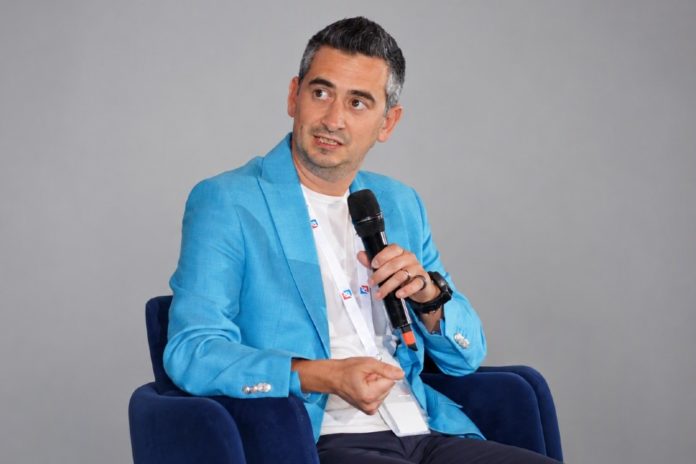
In an interview with The Diplomat-Bucharest, Dragos Vasile, Head of Renewable Energy Division at Eximprod, discusses the main opportunities and challenges shaping Romania’s renewable energy market, the technologies expected to transform the sector and the importance of integrated projects combining generation, battery storage and grid infrastructure. He also outlines Eximprod’s role in the energy transition, the potential for Romanian companies to strengthen their position in the European renewable energy value chain and Romania’s ambition to become a regional energy hub.
Looking ahead, Vasile argues that Romania’s opportunity goes beyond becoming a major producer of green electricity: the country can build a competitive industrial and technological ecosystem around the energy transition, exporting engineering expertise, technology and integrated solutions across Central and Eastern Europe.
How do you see the renewable energy market in Romania evolving over the next five years?
Dragos Vasile, Head of Renewable Energy Division Eximprod: Romania is entering a new chapter in its energy transition.
Over the next five years, we expect renewable generation to grow rapidly, but the real shift will be from simply adding megawatts to building a smarter, more flexible and more integrated energy system.
Solar and wind will continue to expand, while battery storage, grid infrastructure and digital technologies will become increasingly important. We will also see more hybrid projects, combining different generation technologies with storage and sophisticated energy management.
I believe the market will mature significantly. The winners will not necessarily be the projects with the largest installed capacity, but those that are best integrated into the electricity system and the market.
For Romania, this is more than an energy opportunity. It is an opportunity to build a competitive position in the regional energy economy.
What do you consider to be the biggest opportunities for renewable energy development in Romania today?
Dragos Vasile: The opportunity is much bigger than building more solar and wind farms.
Romania has the resources, the industrial base and the geographical position to develop a much broader energy ecosystem — from renewable generation and storage to grid infrastructure, digital technologies and energy-intensive industries.
I see particularly strong potential in integrated projects that combine generation, storage and grid solutions. These projects can deliver more value to the system than standalone generation assets.
There is also a significant opportunity to connect renewable energy with Romania’s industrial base. Competitive and increasingly green electricity can become an important advantage for manufacturing, infrastructure and new energy-intensive investments like data centers.
In other words, the opportunity is not simply to produce more green electricity. It is to create more economic value around it.
What are the main barriers that still prevent Romania from reaching its renewable energy potential?
Dragos Vasile: The biggest challenge is increasingly becoming integration rather than generation.
Romania can develop renewable projects, but the electricity system also needs to evolve at the same pace. Grid capacity, connection infrastructure, permitting, storage and flexibility all need to keep up with the growth in generation.
Predictability is another important factor. Energy infrastructure is a long-term business, and investors need confidence that the regulatory and permitting environment will remain stable throughout the investment cycle.
We should also move away from thinking about projects individually. The question is no longer simply, “Can we build this power plant?” It is, “How does this asset work within the energy system?”
That shift in mindset will be critical for the next phase of Romania’s energy transition.
What are the most important factors companies should consider before entering the renewable energy market?
Dragos Vasile: First, understand that renewable energy is an infrastructure business with a technology component — not the other way around.
A successful project depends on much more than the quality of the solar or wind resource. Grid connection, permitting, land, technology, financing, construction and the route to market all need to work together.
Second, understand the full lifecycle of the asset. Development is only the beginning. The investment case needs to make sense through construction, operation, financing and ultimately exit or long-term ownership.
And third, build the right team.
Renewable energy sits at the intersection of engineering, finance, regulation and execution. Companies that can bring all four perspectives together will have a significant advantage.
What role does Eximprod aim to play in Romania’s energy transition?
Dragos Vasile: We want to be a partner in building Romania’s energy future.
Eximprod brings together three capabilities that are increasingly interconnected: engineering, technology and investment.
We understand the infrastructure behind the energy system, we have engineering and manufacturing capabilities, and we are increasingly involved in renewable generation, storage and energy-transition investments.
That combination gives us a distinctive position.
We don’t see ourselves simply as a contractor, developer or technology provider. We want to connect capital, technology and execution — and help turn energy-transition projects from ideas into operating assets.
Our ambition is simple: to create infrastructure that makes the energy transition possible.
How is Eximprod adapting its business and technology portfolio to the rapid development of renewable energy?
Dragos Vasile: The energy transition is changing the entire electricity ecosystem, so we are evolving with it.
Our portfolio is expanding beyond traditional electrical infrastructure into renewable generation, battery storage, automation, digitalization and energy management.
But the bigger change is how we think about projects.
A renewable asset can no longer be viewed in isolation. Generation, storage, grid connection, control systems and market participation increasingly need to be designed as one integrated solution.
This is where our engineering heritage becomes particularly valuable.
We have decades of experience in the electrical energy sector. We are now applying that knowledge to a much more dynamic energy system — one that is increasingly renewable, digital and flexible.
What technologies or solutions do you believe will have the greatest impact on the renewable energy sector in the coming years?
Dragos Vasile: I would highlight three.
First, energy storage. Batteries will become one of the key building blocks of a renewable energy system because they transform intermittent generation into a more flexible resource.
Second, digitalization. As the system becomes more distributed and complex, data, forecasting, automation and intelligent energy management will become increasingly important.
Third, integrated and hybrid projects. Combining solar, wind and storage can create a much more valuable asset than treating each technology separately.
But there is a fourth element that is sometimes overlooked: the grid itself.
You can build the world’s best renewable project, but if the electricity cannot move efficiently to where it is needed, its value is limited.
The energy transition therefore requires both new generation and the infrastructure that connects everything together.
What opportunities do you see for Romanian companies to become more competitive in the European renewable energy value chain?
Dragos Vasile: Romania should aim higher than simply becoming a market where international investors build renewable projects.
We have strong engineering talent, an established industrial base, competitive costs and an increasingly sophisticated energy sector. These are important foundations for building European-scale capabilities.
The opportunity is to move up the value chain — into engineering, specialised manufacturing, automation, digital solutions, energy infrastructure and integrated project execution.
And the market should not stop at Romania.
The energy transition is happening across Central and Eastern Europe. Romanian companies that develop scalable technologies, capabilities and partnerships can compete across the region.
Our ambition should be to export technology and engineering, not only electricity.
Looking ten years ahead, what do you think Romania’s electricity system will look like — and what role will renewable energy play in it?
Dragos Vasile: Ten years from now, I expect Romania’s electricity system to be significantly more renewable, more digital and much more flexible.
Solar and wind will play a central role, supported by storage, nuclear generation, flexible capacity, stronger grids and regional interconnections.
But perhaps the biggest change will be that the consumer will become much more active.
Industrial companies will manage their consumption around electricity prices and availability. Batteries will provide flexibility. Digital platforms will optimize generation and demand. And electricity will increasingly become a data-driven market.
If we make the right investments today, Romania has the potential to become more than a producer of renewable energy.
We can become a regional energy hub — and a competitive industrial platform for Europe’s energy transition.
That is the opportunity we see at Eximprod.
What advice would you give to young professionals who want to build a career in renewable energy?
Dragos Vasile: Build depth — but don’t build a silo.
Renewable energy brings together engineering, finance, technology, regulation, infrastructure and strategy. The most valuable professionals will be those who understand their own discipline deeply and can also speak the language of others.
I would also encourage young people to work on real projects. There is no substitute for seeing a project move from development and financing to construction and operation.
And finally, stay curious.
The energy system of 2035 will look very different from the one we have today. The people who will create the most value will be those who are prepared to keep learning and adapting.
For the next generation, this is a remarkable opportunity.