
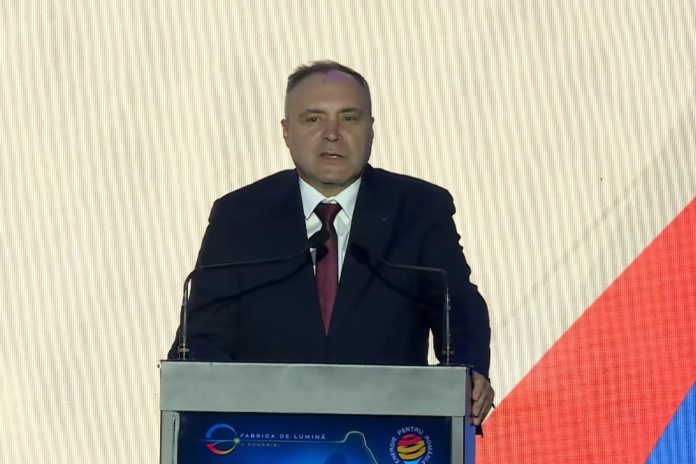
Romania has added 100 MW of new electricity generation capacity and 36 MW of new energy storage capacity this month, and could reach approximately 1,500 MW of installed energy storage capacity by the end of the year, Energy Minister Dumitru Chisăliță said on Tuesday.
“Thanks to intensified monitoring, supervision and discussions with distribution system operators, the energy regulator ANRE and producers, we have managed to bring online 100 MW of new generation capacity and 36 MW of new storage capacity this month,” the minister said at a press conference marking his first month in office, Agerpres reads.
He added that the year-end storage target includes projects developed both through investments supported by the Energy Ministry and by private companies.
Chisăliță also said the ministry had drawn up competency criteria for appointments to the boards of directors and supervisory boards of state-owned companies, ahead of a wave of board changes expected in 2027, when many current mandates are due to expire.
The criteria are intended to improve the selection process and ensure appointments are based on professional qualifications and relevant expertise, he said.
The minister also highlighted progress in clearing delayed payments under energy-sector contracts. When he took office, the ministry had 850 contracts with payment delays of up to one year.
Payments totalling EUR 200 million were made in November, while a further EUR 280 million is planned for the following month, by the end of the year, with the aim of bringing outstanding payments up to date.
Chisăliță said the ministry had also completed the technical documentation for offshore wind energy development, a project that could bring significant additional generation capacity to Romania.
He also pointed to efforts to unblock and approve natural gas infrastructure projects, particularly those involving state-owned gas transmission operator Transgaz.
Another measure under preparation is an emergency ordinance amending Energy Law 123/2012, currently undergoing public consultation. The proposed changes would require electricity producers to allocate 5% of their output to bilateral contracts and suppliers to purchase 6% of their electricity volumes through such contracts.
The measure is intended to increase liquidity and trading activity on the energy market and help reduce electricity prices, the minister said.
The Energy Ministry is also preparing changes to the natural gas price framework from April 3, 2027, including an extension and restructuring of the regulated pricing mechanism and the introduction of a one-year transition period towards a fully liberalised gas market.
“This draft emergency ordinance is part of the measures we intend to implement over the next three years to ensure a functioning market for both natural gas and electricity,” Chisăliță said.
He added that the gas-market proposal was the first of several support schemes and regulatory measures being developed by the ministry, with other initiatives still undergoing consultations and approval procedures with the relevant institutions.