
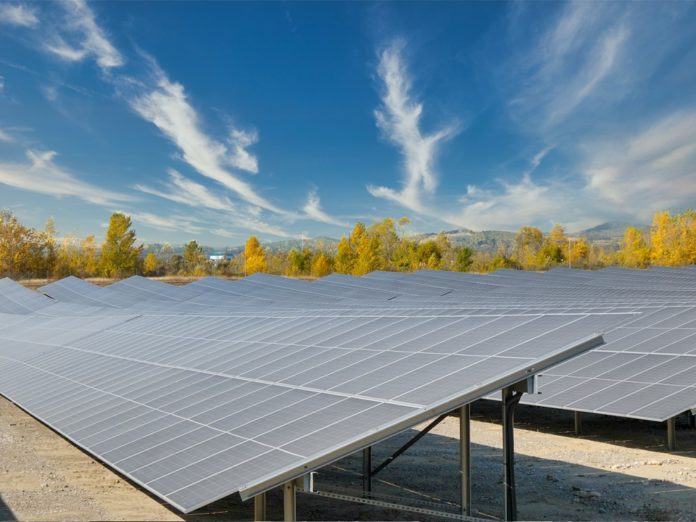
NEPI Rockcastle marks another milestone in its energy transition strategy with the inauguration of the second photovoltaic park in its portfolio, located in Ariceștii Rahtivani (Nedelea), Prahova County. The project is part of NEPI Rockcastle’s green energy investment programme, with a budget of over 100 million euros, dedicated to the development of photovoltaic capacity across the region.
Located on an area of 75.5 hectares, the Ariceștii Rahtivani (Nedelea) photovoltaic park has an installed capacity of 56.2 MW. The project incorporates more than 90,000 bifacial solar panels.
With an estimated annual output of approximately 73,000 MWh, the park will generate enough renewable electricity to cover the equivalent annual consumption of more than 40,000 households in Romania.
”The Ariceștii Rahtivani (Nedelea) photovoltaic park is a concrete example of how we turn sustainability into investments with long-term impact. Green energy investments help us increase the efficiency and resilience of our portfolio while, at the same time, generating sustainable value for tenants, communities and the entire ecosystem surrounding our shopping centres,”, said Andrei Radu, Group Development Director, NEPI Rockcastle.
With the commissioning of the Ariceștii Rahtivani (Nedelea) project, alongside the Group’s first photovoltaic park inaugurated last year in Chișineu-Criș (Arad County) and the systems installed on the rooftops of its shopping centres, NEPI Rockcastle will increase the share of its total electricity consumption covered by its own renewable energy sources to 31% by the end of 2026. This represents a significant increase from the 6% level recorded two years ago.
The Ariceștii Rahtivani (Nedelea) photovoltaic park was built on a former mineral aggregate extraction site, giving a new economic purpose to previously degraded and unproductive land. Currently, the land between the rows of solar panels is used as pasture for sheep belonging to local farmers, an environmentally friendly vegetation management solution that directly supports the rural economy in the area.
The project was designed with a long-term vision, with the existing infrastructure, which includes its own transformer station, allowing for future expansion through the integration of battery energy storage systems (BESS).