
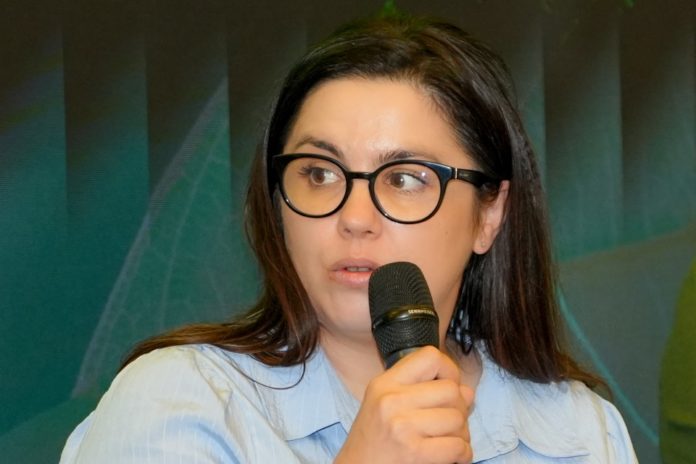
Long-term operational support, technological flexibility and transparency are becoming increasingly important as renewable energy assets move from construction into their operating and modernization phases, Elena Popescu, CEO of Elektra Renewable Support, said at the Green Energy Conference, organized by The Diplomat-Bucharest.
“We are long-term partners through our operational management activities, including dispatching, operations and maintenance. This means we can bring value to our clients and partners by guiding them through the technical operating period and the modernization of their investments,” Popescu said.
She said one of Elektra Renewable Support’s key advantages is its ability to work across different technologies.
“I consider a major advantage to be the fact that we are relatively flexible when it comes to technology. Through our development, we have managed to have options for whatever technology is used in the respective plants,” Popescu said.
Popescu said technological flexibility and transparency are essential for operators and investors dealing with renewable assets over their entire lifecycle.
“It is important to be flexible and transparent. This means that you can accommodate anything from a technical and applicability perspective,” she said.
The ability to adapt existing renewable assets to new technologies is becoming particularly relevant as storage and hybridization gain importance.
“If you buy an existing asset, it is important to have the possibility to hybridize it as a technical solution,” Popescu said.
She added that projects already undergoing capacity increases or updates to their grid connection approvals can be particularly well positioned for hybridization.
“If it already has a process for increasing capacity or updating the grid connection approval in order to hybridize it, accommodate batteries and accommodate the battery’s consumption, that is a major advantage,” she said.
Popescu also highlighted transparency as a key factor in long-term partnerships, arguing that problems in renewable projects often emerge well after construction has been completed.
“Another important component that we have observed over the long term is transparency. Transparency is the key word in a partnership,” she said.
She said that the greater the number of companies involved in constructing a power plant, the greater the potential risk of problems emerging later in the asset’s operating life.
“What we have observed is that the more companies are involved in building a power plant, the greater the risk of having problems over the long term,” Popescu said.
The reason, she explained, is that responsibilities and potential issues can become dispersed during the construction phase, while the consequences may only become visible years after commissioning.
“During the construction phase, everything gets dispersed and the problems do not usually appear after commissioning. They usually appear after one year, two years, five years, and even after 10 years. We have had a situation like that,” she said.
For Popescu, keeping the number of parties involved in a project manageable can help investors and operators maintain greater control over the asset throughout its lifetime.
“I believe that what you bring to the table should be as limited as possible in order to have better control,” she said.
Ultimately, she said, operational and technical problems have a direct financial impact.
“Everything translates into money. In the end, problems translate into money,” Popescu said.
Her comments underline the importance of looking beyond the construction and commissioning stages of renewable projects, with asset management, technological flexibility, hybridization and long-term operational accountability increasingly shaping the economics of renewable investments.