
The Association of Energy Suppliers in Romania (AFEER) welcomes the National Energy Regulatory Authority’s (ANRE) initiative to revise the regulatory framework governing electricity supply and the handling of complaints submitted by final customers, as well as its efforts to create the conditions for the development of modern and innovative value-added services for both residential and non-residential consumers.
However, to ensure that the measures included in the two draft orders can be implemented effectively and predictably, without creating market disruptions or distortions, AFEER has submitted a series of concrete proposals for amendments to ANRE.
Supplier assessment mechanism should reflect actual performance, not complaint volumes
One of the draft orders introduces a mechanism for assessing the performance of electricity and natural gas suppliers, including the publication of an index and a “traffic light” classification system — green, yellow and red — based on how suppliers handle complaints submitted by final customers.
AFEER supports the objective of increasing transparency and comparability among suppliers and considers any tool that helps consumers make better-informed decisions to be welcome. The association has consistently supported this direction, including through its “An informed consumer is a protected consumer” campaign, launched in 2015.
However, AFEER believes that the proposed methodology needs to be adjusted to ensure that the published indicator accurately reflects supplier performance. In its current form, the proposed “Final Customer Satisfaction Index” does not measure consumer satisfaction, but rather the supplier’s effectiveness in handling complaints. Therefore, AFEER has proposed renaming it the “Complaint Management Performance Indicator” (IPGR).
The association also proposes that only complaints that are both substantiated and attributable to the supplier should be included in the calculation. AFEER points out that many complaints concern the activities of distribution or transmission system operators, meter readings, consumption measurement or supply continuity — matters that do not fall under the supplier’s responsibility.
The same principle should apply to complaints submitted directly to ANRE, with only those cases determined to be substantiated and attributable to the supplier being included in the indicator, according to AFEER.
The association also highlights the structural differences between suppliers. Companies serving large numbers of residential customers are naturally exposed to a higher volume of complaints than suppliers focused mainly on non-residential or industrial customers. Applying identical criteria to suppliers with significantly different customer profiles could therefore produce misleading results and unfairly disadvantage certain categories of market participants.
AFEER further proposes that, if considered necessary, the new order should enter into force on 1 January 2027, followed by a 12-month testing and calibration period during which the indicator would be communicated exclusively to suppliers. The association also calls for prior validation of the data used in the calculation, a minimum 10-business-day period for submitting comments, and quarterly publication of the indicator.
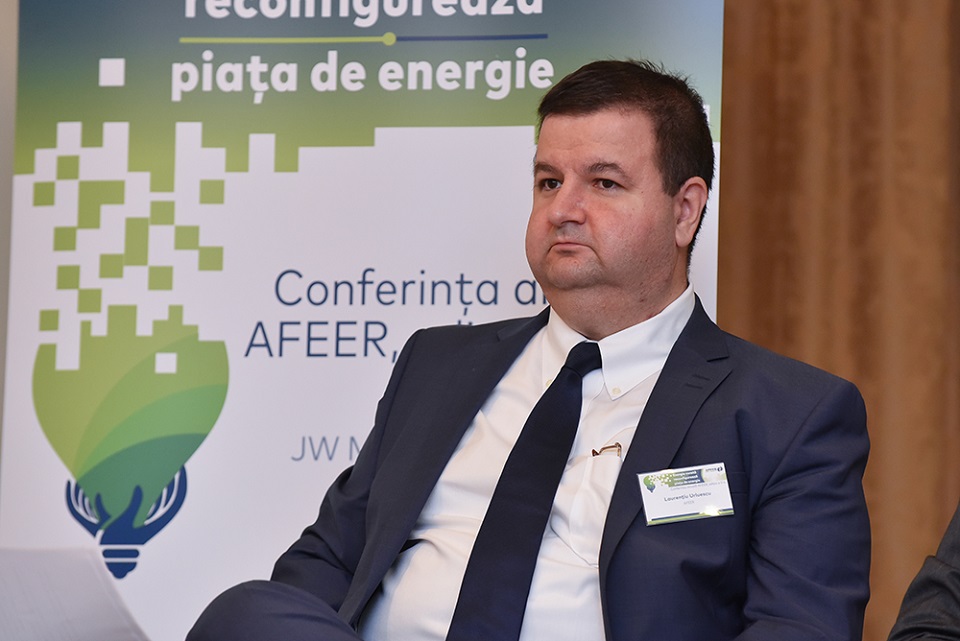
“ANRE’s initiative is a positive one and is in line with AFEER’s longstanding support for a transparent and competitive energy market. However, the methodology needs to be adjusted so that the indicator accurately reflects suppliers’ performance. We have also proposed removing the colour-based classification, as such a system could be perceived as an official negative recommendation without necessarily reflecting the actual differences between suppliers,” said Laurențiu Urluescu, President of AFEER.
Automatic consumption notifications require adequate metering infrastructure
The second draft order introduces an obligation for suppliers to automatically notify customers when their consumption reaches 80% of the consumption estimated under their consumption agreement.
AFEER supports ANRE’s objective of providing consumers with tools that can help them manage their energy consumption and costs more effectively. However, the association argues that the proposed obligation is currently not technically feasible because suppliers do not have access to the information required to issue such notifications in real time.
At present, electricity consumption is measured by meters managed by distribution system operators. In the case of conventional meters, readings are carried out, under applicable regulations, at intervals of up to three months. Consequently, suppliers do not have the necessary information to determine when a customer’s consumption reaches 80% of the monthly level specified in the consumption agreement.
Implementing such a mechanism would require extensive deployment of smart metering infrastructure, as well as the continuous and automated exchange of data between distribution system operators and suppliers.
Even with such infrastructure in place, however, applying the obligation could remain challenging due to the dynamics of the retail supply market, including the possibility of customers switching suppliers within a short period of time and the frequent adjustment of consumption agreements.
According to the national smart metering implementation schedule, by the end of 2028, the share of consumption points equipped with smart meters is expected to range from approximately 33% to 70%, depending on the distribution system operator.
AFEER therefore considers that the proposed notification obligation cannot be applied uniformly to all consumers under the current infrastructure and should be aligned with the actual pace of smart meter deployment and the availability of real-time consumption data.