
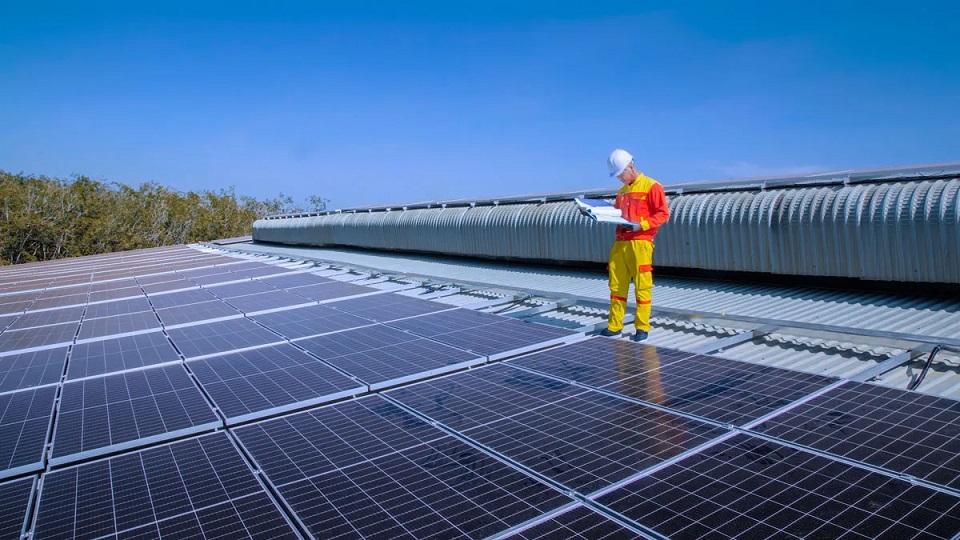
The European Bank for Reconstruction and Development (EBRD) is supporting Romania’s energy security by arranging a €192 million financing package for the construction of three new solar power plants with a total installed capacity of 531 MW in Romania.
The solar projects are ultimately majority owned by Nofar Energy, an Israeli renewable energy company listed on the Tel Aviv stock exchange.
The EBRD will provide €64 million for its own account for the construction of the Slobozia, Corbii Mari and Iepuresti II solar power plants, with the remaining €128 million mobilised from commercial lenders.
Located in Dâmbovița and Giurgiu counties, the solar power plants are expected to generate approximately 676 GWh of green electricity annually, avoiding around 280,000 tonnes of CO₂ emissions each year. This will significantly contribute to Romania’s target of achieving 38 per cent of gross final energy consumption from renewables by 2030.
The Slobozia project will benefit from a 15-year Contract for Difference (CfD) awarded under Romania’s inaugural CfD auction, a scheme designed and implemented with EBRD technical assistance. The energy produced from the other two solar power plants will be sold on Romania’s competitive Day-Ahead Market, demonstrating the growing commercial viability of unsubsidised renewable energy in Romania.
Grzegorz Zielinski, EBRD Head of Energy Europe, stated: “We are pleased to support Nofar Energy’s renewable investments in Romania. This financing demonstrates how we can scale up renewable investments and support Romania’s ambition to add more than 10GW of renewable capacity by 2030.”
Favi Stelian, Chief Executive Officer of Nofar Energy Romania, said: “We are pleased to announce this second financing with EBRD, which strengthens confidence in our long-term vision and our ability to deliver impactful renewable infrastructure in Romania. This partnership accelerates the deployment of new green energy assets and reinforces Nofar’s role in advancing Romania’s sustainability goals and regional energy security.”