
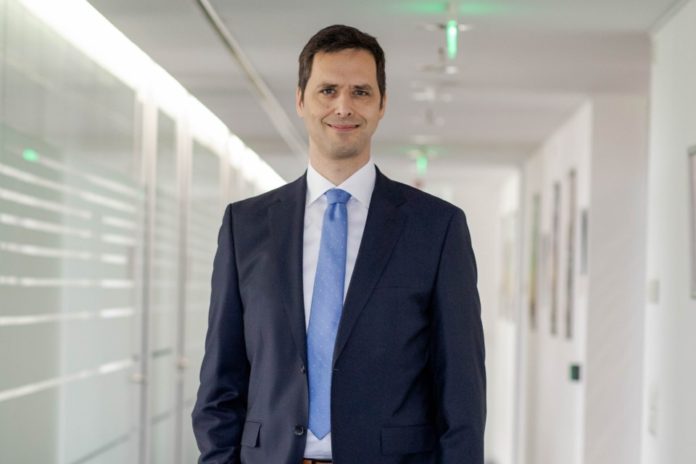
“Romania has been, is and I am convinced that it will remain interesting for German investors. There are several attractive areas for potential future developments, in addition to the established ones, such as IT, cybersecurity or food production. Sectors such as infrastructure, defense, research and development or industries involved in the transition to green energy have great potential to attract major investors,” Volker Raffel, president of AHK Romania and CEO of E.ON Romania, told The Diplomat-Bucharest.
“AHK will continue to be an important voice of the business environment, which will transmit clear messages and solidly argued proposals on what is needed for economic development and for enhancing cooperation between countries. Only by working together can we achieve more, can we better solve the problems we have. Economic cooperation is not just a game of negotiating solutions, but together we can generate more, we can build more, we can offer more so that, in the end, we all benefit.
Therefore, my goal is for the AHK to attract even more members and thus contribute significantly to the development of economic exchanges between Germany and Romania. I believe that this is already a success story, and it must be continued. And again: this brings advantages to both sides.”
As the President of AHK Romania, how do you see the evolution of the current business climate and what are the main challenges and opportunities for Romanian German economic cooperation in the coming years?
Romania has been, is and I am convinced that it will remain interesting for German investors. There are several attractive areas for potential future developments, in addition to the established ones, such as IT, cybersecurity or food production. Sectors such as infrastructure, defense, research and development or industries involved in the transition to green energy have great potential to attract major investors. For example, we all know that, currently, European competitiveness suffers because energy has become too expensive. Therefore, Romania, with its gas and its potential in the area of electricity generation, is particularly interesting. For both sectors, gas and electricity, the current projects, such as Neptun Deep or the new power plants under construction, must first succeed, but these seem quite advanced – this would boost Romania’s competitiveness and even contribute to European competitiveness.
At the same time, the German market is very important for Romanian exporting companies. We know that there is a lot of potential to export even more. For this, Romania needs to become more competitive at the industrial level. Romania’s economy will restart if productivity grows faster than wages. For this to happen, investments are needed. A solid development in the energy sector, for example, is likely to lead to progress and increased competitiveness in many other related industries. We are already seeing a series of major investments, we are seeing infrastructure works progressing. We are seeing highways that are finally being put into operation or even completed. All of this represents a good basis for economic growth.
AKH will continue to be an important voice of the business environment, which will transmit clear messages and solidly argued proposals on what is needed for economic development and for enhancing cooperation between countries. Only by working together can we achieve more, can we better solve the problems we have. Economic cooperation is not just a game of negotiating solutions, but together we can generate more, we can build more, we can offer more so that, in the end, we all benefit.
Therefore, my goal is for the AHK to attract even more members and thus contribute significantly to the development of economic exchanges between Germany and Romania. I believe that this is already a success story and it must be continued. And again: this brings advantages to both sides.
What do you think should be the strategic priorities that guide the dialogue between the public and private sectors in Romania, to ensure a sustainable and competitive business environment?
There has been a lot of talk, for too many years, about predictability and stability. Even if they seem like words that have entered the wooden language of business people, they are important for investors. Of course, we do not live in a static world, and legislative adjustments will be necessary in the future. But investors need confidence in respect of fundamental principles.
For example, consulting the business environment when it comes to legislative changes is, unfortunately, sometimes completely forgotten, sometimes only formalized and done quickly. It would be efficient if all proposals that have a significant impact on companies were discussed and analyzed before they enter into force. The voice of economic agents or associations is not the only one that must be taken into account by politicians, but it is important to know if a law has unwanted effects, which no one initially thought of. That is why consultation is essential.
There should also be a clear division of responsibilities. Just one example: in the energy sector, the Ministry of Energy is both the institution that develops policies and the shareholder of some of the companies operating in this market. So, it is both a player and an arbitrator. This is something that brings with it a certain distrust.
A third example: the state owes money in various economic sectors, money that it does not pay on time. Good, clear governance and a rule of law create more trust, and this helps investors to make medium and long-term plans and paves the way for investments more than any economic stimulus program.
Bureaucracy must also be greatly reduced. Because bureaucracy not only means that the state or companies have very high costs to complete the documents they need, but also that it slows down all processes and the worst thing is that it slows down – and even prevents – investments. And that is exactly what we DO NOT need! If we reduce bureaucracy, we have a chance to have economic growth, even accelerated one. This is the real solution to the current problems. Not to be misunderstood: the state has essential tasks that it must manage firmly, and the existence of a certain bureaucracy is justified. However, there are far too many examples where unnecessary information is requested, competences are unclear – and sometimes it seems that the approach is more to demonstrate its authority to citizens or companies, than to solve problems. What is needed is not a weak state, but a strong and flexible one – with a reduced number of employees. I believe that Romania has a chance to correct these things. If everything is done properly, all the good measures will contribute to economic growth and to attracting more EU funds. However, I am confident that these problems will be addressed by the new government, but it is better to solve them now before they become twice as big later.
What are E.ON Romania’s strategic objectives for the next 3-5 years? What are the company’s main investment priorities in Romania?
Let me start with a general remark: technologies are evolving and bringing with them opportunities that we did not have before.
For example, 30 years ago, when I was studying physics and energy engineering, producing a photovoltaic panel consumed more energy than it could generate. Ten years later, the technology became functional, with clear benefits for the climate, but it still required subsidies to be implemented. Today, it is the cheapest technology for producing electricity. Therefore, more and more photovoltaic panels will be installed, which will contribute to lowering the average price of energy, which increased significantly during the energy crisis. Artificial intelligence and IT technologies offer us new opportunities, and electric vehicles are becoming more and more attractive. There are other positive developments. Of course, all these transformations must be managed so that the energy system operates reliably (safety), efficiently (accessibility) and with minimal impact on the environment (sustainability). And here, we contribute.
The coming years are decisive in terms of the success of this transition, but this involves massive investments in smart grids, digitalization, transport electrification and energy solutions for consumers.
On the distribution side, for the fifth regulatory period (2025-2029), Delgaz Grid is considering an investment plan of around 900 million euros, of which 560 million euros are planned to be provided from its own sources.
I want to emphasize the importance of investments in the electricity distribution system, for the development, modernization, automation and digitalization of the network. Given the strong growth in the number of prosumers and green energy generation capacities, increasing the capacity of the grids to take in energy produced from renewable sources is a major challenge, which we are approaching with extreme seriousness.
We expect even greater increases in grid connection requests in the coming period, which is a good thing, because it is important to understand that, without renewable projects, we cannot have cheap energy. Obviously, we need a market in which a lot of energy is produced and then the price will fall, and not because the government or the regulator wants it that way. So, by integrating renewables, being able to manage the grid, we will also be able to ensure a good price and a sustainable future for the energy system.
At the same time, we want to contribute to the transition to emission-free energy, including for the heating area, which currently relies heavily on natural gas. We believe that we can provide the same comfort to our customers using the current infrastructure, with relatively small modifications and with the same operational safety, using basically a different gas. The use of green gases such as hydrogen produced through electrolysis, biomethane, but also other technologies are part of the solution for the decarbonization of the sector. And here Romania has everything it needs. Agriculture, forestry and waste management can bring significant volumes of biomethane, and Romania is among the few places with such an attractive potential for hydrogen production.
Regarding the supply activity, our approach is to offer customers of all types, households, SMEs, companies and institutions, energy efficient solutions that they need to reduce their energy costs and, at the same time, reduce their carbon footprint.
Of course, the exponential growth in the number of prosumers, together with the numerous non-residential generation projects completed or under construction in recent times, plus the growing demand for energy solutions (from heating, cooling to technical assistance) represent important development opportunities for our business. Customers appreciate the fact that we offer both quality and good services.
We are also active in the area of decentralized renewable electricity generation, where, for example, we have already signed several contracts in Romania for the construction and operation of photovoltaic power plants for partners under PPA contracts, because we want to be as present as possible in this expanding market area.
How much does Delgaz Grid intend to invest in distribution networks and over what period of time?
For this year, the total amount allocated to investments is a record, of about 1.28 billion lei (over 253 million euros), being over 41% higher than in 2024. Thus, over 562 million lei (111 million euros) are allocated for the modernization of gas pipelines and connections, improving the quality of service and developing the natural gas distribution system and connecting new consumers.
On the electricity side, investments of 715 million lei (about 142 million euros) are scheduled, of which over 187 million lei (37 million euros) represent EU funds. The investments aim to continue the implementation of SCADA and the automation of the distribution system, SMART metering, the modernization of transformer stations and overhead networks, the construction of new transformer stations, etc.
We have 14 projects in various phases of implementation with signed financing contracts, totaling approximately 402 million euros, of which 307 million euros represent European financing. The amounts required for co-financing come from our own sources, but also from a 200 million euro loan contracted in November last year from the European Investment Bank.
One of the development programs that we are considering in the coming period is the CARMEN common interest project, developed in partnership with the transmission and system operators from Romania and Bulgaria, a project that aims to modernize the electricity network, its smartification and digitalization. This project ensures an increase in the distribution capacity of the network in order to take over the renewables that will be put into operation, an increase in the interconnection capacity with the transmission operator (Transelectrica) as well as the preparation of the network for additional interconnections with distribution operators from neighboring countries (Ukraine, Moldova). The value of the first stage of the project is over 200 million euros, related to the investment of the three partners, of which Delgaz Grid’s investments will be approximately 78 million euros (own funds and European funds).
I am proud of the fact that last year Delgaz Grid ranked first among distribution operators, with the shortest duration of unscheduled interruptions, for the fourth consecutive year.
Thus, in 2024, the main indicator of continuity of the distribution service, the average duration of unscheduled interruptions (SAIDI) in Romania was 97.75 minutes, for the first time it fell below the symbolic threshold of 100 minutes – the entire industry has made significant progress, but for users connected to the Delgaz Grid network, the value was 69.8 minutes.
Also, Delgaz Grid occupies the first position in the indicator regarding the number of unplanned interruptions (SAIFI), with 0.77 interruptions (7.2% lower than that recorded by the company in 2023), half the national average of 1.70 interruptions.
How do you see Romania’s energy mix evolving over the next decade?
Romania is planning major changes in its energy mix over the next decade, guided by the Energy Strategy 2025-2035. The plan is to double its installed electricity generation capacity to around 40 GW by 2035, with over 80% coming from renewable sources such as wind, solar, hydro and biomass.
The country is moving towards a less import-dependent, cleaner, more resilient and future-proof energy system, but to get there, modernising the grid is as important as building new generation capacity. No one would allow an engineer to build 1,400 MW of new nuclear capacity without also building the necessary transmission lines. However, in Romania, we have added 3,000 MW of photovoltaic power to the distribution grid in the last 10 years, without a regulation that would trigger a sufficient increase in infrastructure investment. We are doing everything we can with the means available, but under these conditions, the system remains overburdened and has difficulty integrating all the new distributed generation capacities that continue to appear.
Sometimes I hear the argument that gas from Neptun Deep would no longer be needed in the context of decarbonization, or that hydrogen and biomethane are not essential because Romania already has gas from Neptun Deep. But what I see is that, in addition to the use of hydrogen and biomethane, Europe will need large quantities of gas for decades. Even in many zero-emission scenarios for 2050, residual gas consumption is expected, with the associated CO₂ capture. I clearly prefer gas produced in Europe, rather than a dependency on imports, especially when it is extracted under stricter environmental controls than in almost any other country in the world. Romania benefits from being a producer – not only by covering domestic demand, but also by exporting gas and developing gas-fired industrial production.
The energy strategy provides detailed plans for future developments – for example, for expanding hydropower, replacing coal with gas, etc. Unlike Germany, Romania still has nuclear energy and will have even more in the future. There are other specific objectives, but the essential thing is that the strategy pursues a balanced mix of sources, capitalizing on the excellent potential of Romania, located in the heart of the region – and this is the right direction.
However, I repeat: it is important to emphasize that achieving this transition is not only about generation capacity. A massive increase in renewable capacity must be accompanied by serious investments in electricity networks. Without a modern, flexible and smart grid, we cannot fully integrate renewables or ensure energy reliability. This includes expanding energy storage, modernizing transmission infrastructure and facilitating decentralized energy solutions such as consumers and microgrids.
How ready is E.ON to integrate more renewable energy sources into its distribution and supply systems?
Obviously, the main solution for increasing the network capacity to take in energy produced from renewable sources is represented by investments. For most prosumers, with small approved powers, below 27 kW, the connection is usually made to the low-voltage network, consequently part of the investments are directed towards this network segment, especially in areas with high concentrations of prosumers.
For large producers or prosumers, wind or photovoltaic parks, the solutions go towards the high-voltage distribution networks (110 kV) or even the transmission network (voltage greater than or equal to 220 kV), managed by the transmission and system operator, Transelectrica.
For the first time among distribution operators, Delgaz Grid provides potential investors in renewables with a tool through which they can get a general idea of the possibilities of connecting new production capacities to the grid, a map of renewables in Moldova. In this way, if the potential investor has several locations in mind, he can choose the most convenient one from the perspective of connecting to the grid.
Another direction that we are exploring refers to flexibility services, which represent a win-win solution for managing consumption and production. At this moment, in Delgaz Grid we are developing, for the first time in Romania, the REDFlex pilot project, in partnership with Transelectrica, for the implementation of flexibility services, focusing on both regulatory requirements and the needs of the company.
Flexibility in the energy sector refers to the ability of the energy system to adapt quickly to variations in energy demand and supply. Energy flexibility is essential to maintain the balance between energy demand and supply, considering the variability of consumption and production: daily, weekly and seasonal flexibility.
Prosumers/producers, companies, consumers, energy service providers can participate in the flexibility market on a voluntary basis. Basically, the flexibility service provider increases/decreases its energy consumption/production when there are imbalances between production and consumption, and is paid for this based on previously established prices.
What are the main challenges that E.ON is currently facing in Romania – legislative, operational or market-related?
It is always a challenge, in the context of competition, to provide the best quality services to our customers – but that is exactly what we do, and the result is significantly higher loyalty from our customers, compared to the market average. For the energy solutions segment, the effect can be negative, because due to the increase in the cost of equipment, people may postpone the purchase of solutions, etc. But the impact can also be positive, as we are convinced that more and more customers realize that our solutions offer independence and energy efficiency, meaning the same or even higher level of comfort, but with lower electricity or gas consumption, in the future. However, a serious deficiency remains that the Romanian authorities have not resolved the payment of the billions of lei that suppliers have already been obliged to pay for electricity and gas delivered to consumers, but for which the state has not yet reimbursed the respective amounts. This clearly represents a distortion of competition. The end of the capping scheme means that this chapter must be closed immediately as well.
As for the distribution area, at this point we can say that the first package of measures does not generate a direct impact on our specific activity. Packages 2 and 3, however, include additional fiscal measures, but their implications will be analyzed in detail at the time of publication.
However, we also see important opportunities. We continue the dialogue with the regulatory authority to adjust the methodological framework, so that it reflects as accurately as possible the operational realities and supports the sustainability of investments. At the same time, the maturation of the prosumer market and the constant interest in green energy provide us with positive prospects in the medium and long term. We focus on adaptability, operational efficiency and maintaining a balance between investment needs and financial sustainability.
How can the energy sector contribute to reshaping Romania’s economic competitiveness in Europe? What changes would you like to see from policymakers to better support private investment in energy infrastructure?
There are three major themes of the moment: electrification, infrastructure and security of supply. To these we can also add digitalization, as well as cybersecurity. The question is how do we approach them to solve them? The answer is that there are no miraculous solutions (a “silver bullet”), but well-targeted measures, which if applied intelligently and starting now can take us where we all want to be.
Massive investments are needed in distribution networks, 2-3 times higher in the next decade, compared to the previous one. According to the Valorem study, in Romania the need for additional annual investments in networks is approximately EUR 1.1 billion/year, equivalent to 3.3% of GDP.
Not only do we have to, but we are obliged to make investments, because electrification and the green energy wave have brought great challenges to the market. In addition to the need to replace the network infrastructure, we also have the pressure of expanding electric car charging stations, data centers, heat pumps, urbanization, and so on. We are already seeing local overloads of the network.
Moreover, we must be able to safely connect new green energy generation capacities, prosumers, but also because there are other threats that we have to deal with, namely those in the cybersecurity area. Because, here, the question is not whether we will be attacked, but whether we will be able to defend ourselves or, in the worst case, whether we will have the ability to recover from such an attack and in how long.
As a sector, we have the capacity to unlock 5 billion lei, annually, additionally, as investments in networks, just by adding 50 bani, monthly – a tiny additional adjustment, in the bill of an average consumer who consumes under 100 kWh.
But if we manage to invest these amounts, Romania can benefit from an annual economic impact, direct and indirect, of up to EUR 10.6 billion. New jobs will be created, additional state revenues will be generated, economic growth will be boosted and even energy prices will be reduced in the medium and long term.
The costs of connecting to the network and the predictability of prices are essential for companies to be able to plan their investments and activities. And if the network is modern and solid, the connection costs become lower for investors in the industry. Also, with more users on the network, the distribution tariff will decrease. A shorter time to obtain approvals for renewable energy and energy infrastructure projects can contribute to lowering the costs of electricity production.
At the same time, a realistic and correct adaptation of the regulatory framework is necessary. For these investments, there must be an assured cost recovery, including an adequate profitability. No one can invest further to lose. Failure to ensure a predictable, clear, favorable and stimulating regulatory framework risks driving capital away to other states that have understood the importance of energy infrastructure.
Savings resulting from smaller, survival investments will not compensate for the huge future costs generated by insufficiently developed networks. The tendency to restrict investments for the future for fear of the influence of current tariffs on the final price for consumers hinders the development of energy infrastructure.
Regardless of the concession area, investments made during this period will benefit both the state and all final consumers in Romania. The assets generated from investments in the energy infrastructure area represent goods that are and will remain on Romanian territory, for the benefit of Romanian consumers.
Every RON invested in Romania’s electricity grid represents a success for the country and will not disappear.
How does E.ON integrate digitalization and innovation into its operations and customer services?
In our supply activity, we have been investing for years with priority in the digitalization of services – the largest part of which is in the development and improvement of IT platforms, so that customer interactions with the company are as simple and fast as possible.
Compared to 2020, the number of digital customers has doubled, proving the growing interest in digital services. At this time, over 2.4 million consumption points are registered on the E.ON Myline platform, almost 70% of the consumption points managed by E.ON Energie România. Also, over 1.97 million electronic invoices are activated.
I believe that the coming years will bring significant transformations in the way users interact with platforms and technologies. These developments will allow for the provision of personalized digital experiences, and human interaction will become much more empathetic and individualized. Therefore, the difference in the market will be made by these new digital technologies and offers tailored to customer needs, so that they benefit from comfort, safety and predictability.
In this direction, we have developed a series of key impact initiatives that help customers to use digital services more and more and to optimize their time and interactions in their relationship with us. For example, through the eon.ro website and the E.ON Myline platform, we provide customers with self-service flows: from contracting, data modification to contract terminations. Customers have the opportunity to provide feedback, in this way customer satisfaction is automatically measured and rapid adjustments are made in IT platforms according to their needs. Fluid omnichannel interaction ensures integration between mobile application, web, chatbot, call center. Thus, the customer, regardless of the channel they use, receives the answer at the first interaction.
We recently launched AI Search, the first intelligent search tool for customers and visitors to the eon.ro website, which allows them simple and fast access, 24/7, to all information on the portal, which is a first for the Romanian energy market.
For users of the distribution system, a series of services are available online on the Delgaz Grid portal, addressed to both consumers and future consumers, as well as to suppliers and energy service providers with whom we collaborate: network access platform, with a section dedicated to prosumers, platform for scheduling meter replacement, reporting faults, changing supplier, etc.
For example, the number of requests submitted online for connection to the natural gas and electricity networks increased by 140% and 52%, respectively, in the first seven months of 2025 compared to the same period last year, but the waiting time for them was significantly reduced.
We aim to be at the forefront of these changes and continue to invest in order to bring the latest technologies to customers.