
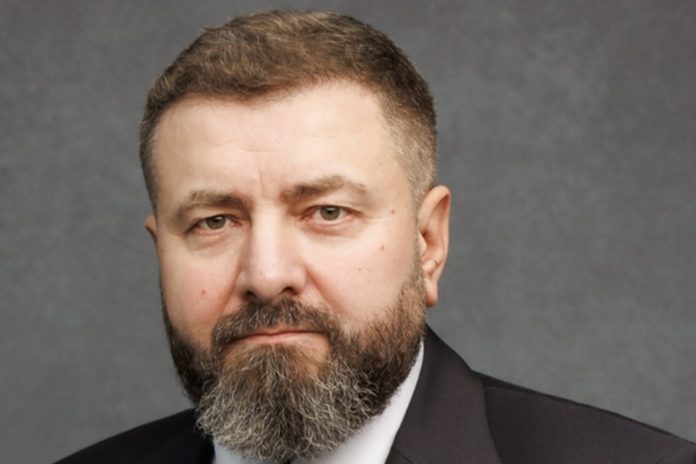
Romania needs “energy pragmatism” and “industrial pragmatism,” as well as a greater focus on making use of investments already made and all available energy sources in order to preserve the competitiveness of its industrial sector, Marian Năstase, Chairman of the Board of Directors of ALRO, said at the annual conference organized by InvesTenergy.
Năstase argued that the development of generation capacity without sufficient investment in electricity grids and interconnections has contributed to Romania becoming “stuck in its own bubble,” with relatively high energy prices.
Asked what Romania should do to ensure that major industrial consumers such as ALRO can benefit from competitive energy prices at the end of the energy transition, Năstase said the country needs to take a longer-term view.
Năstase recalled that around 15 years ago, industry was told that the energy transition would lead to electricity that was widely available, affordable and green.
“What were we being told 15 years ago? That prices would go down. I remember a discussion with DG Energy in Brussels, where we were told that energy would be available on demand, affordable and green. And I said at the time that it would not be affordable, it would not be on tap and it would not be green. Fifteen years later, we are exactly in that situation: it is not available, it is not green and it is not cheap,” Năstase said.
The ALRO chairman also stressed the importance of the specialists directly responsible for operating Romania’s energy system, referring to the National Energy Dispatch and grid operator Transelectrica.
“There are people who work from morning until night. I do not even want to think about what they have been through. I do not want to think about what has happened at the National Energy Dispatch, at the dispatch centre and at Transelectrica since the middle of the year. These are people who are doing their jobs and who are not being listened to, even though they are among the few professionals we still have and we have to rely on them because we have no choice,” he said.
“People need to be respected — the people working in the energy sector,” Năstase added.
Asked how ALRO can remain competitive, including in terms of energy costs, Năstase said he remains optimistic and argued that Romania should focus on making productive use of investments that have already been made, including in renewable energy.
“I am optimistic. If we have already made investments, let’s try not to destroy them,” he said.
Năstase rejected the idea of abandoning existing wind and solar capacities, arguing that the investments already made need to be fully utilized.
“I am completely against such an approach, because I am an economist. It is simple: very few of us are still producing value. Wherever investments of this kind have been made, they need to be put to work, because they are still not being properly valued,” he said.
In Năstase’s view, the solution for Romanian industry is not to choose a single energy technology, but to build a diversified, long-term energy mix.
“What I am proposing, and what our plans are, is to use the energy mix that already exists. There needs to be industrial pragmatism. There needs to be energy pragmatism. We need to put ideology aside, we need to put religion aside, and we need to get back to realism and energy pragmatism. We need all energy sources,” Năstase said.
ALRO is seeking to build a long-term energy mix for its operations, an approach the company has already tested during the recent energy crisis.
“What we are trying to do is build a long-term energy mix structure. We have already tested it during the crisis and a pilot project worked,” the ALRO chairman said.
One of Romania’s main structural problems is the insufficient development of energy infrastructure and the relatively low density of electricity networks compared with Western Europe, according to Năstase.
“If we looked at a map of European energy infrastructure, it would be visible even from Mars. Western Europe has an enormous level of grid density. If you look just at the networks in the Benelux, Germany and France, in that northwestern part of Europe, you can barely see the names of the cities because the network is so dense. As you move east, it becomes increasingly sparse,” he said.
Năstase argued that the fundamental issue is not only the level of investment, but also the sequence in which investments have been made.
“We keep putting the cart before the horse. Instead of starting with the grids, we started with generation,” he said.
For energy-intensive industries such as aluminium producer ALRO, Năstase’s message is that competitiveness will depend on Romania’s ability to combine existing generation capacity with stronger grids, interconnections and a pragmatic approach to the country’s overall energy mix.