
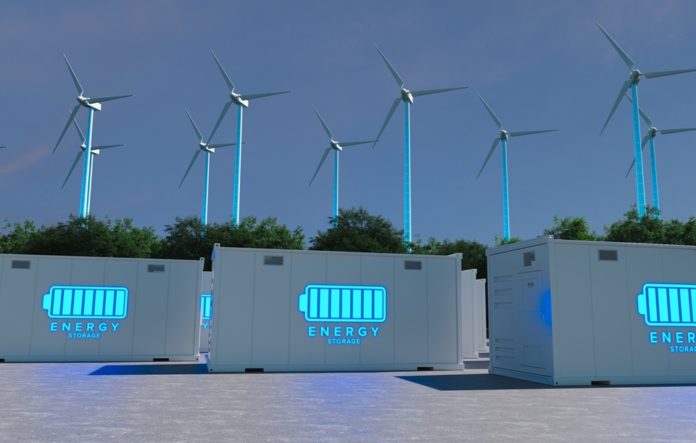
ENGIE Romania has acquired a new battery energy storage system (BESS) project in Călan, Hunedoara County, marking another step in the company’s expansion of its energy storage portfolio.
The project, which is currently at the pre-construction stage, will have an installed power capacity of 54 MW and a storage capacity of 216 MWh. At full power, the system will be able to supply electricity to the grid for up to four hours. Commissioning is scheduled for January 2029.
Following the acquisition, ENGIE Romania’s energy storage portfolio will reach approximately 140 MW / 386 MWh. In addition to the Călan project, the portfolio includes two battery storage systems currently under construction: an 80 MW / 160 MWh facility in Șelimbăr, Sibiu County, and a 5 MW / 10 MWh system in Băleni, Galați County.
The Băleni project is integrated into ENGIE Romania’s operational 50 MW wind farm and represents the company’s first hybrid project in Europe combining wind power generation and battery energy storage at the same location.
“Energy storage is an essential stage in the development of the renewable energy sector. While the first wave of investment focused on developing new generation capacity, the next stage is about efficiently integrating this capacity into the energy system and increasing its flexibility,” said Cristian Buzan, Managing Director Renewables & Batteries at ENGIE Romania.
“By developing a diversified portfolio of storage solutions, we support the efficient integration of increasing volumes of renewable energy while strengthening our storage capacity, in line with our 2030 objectives,” he added.
The acquisition comes as ENGIE accelerates its expansion in the flexibility segment across Europe. During July and August alone, the group expanded its portfolio through strategic acquisitions, construction starts and the commissioning of new projects in Poland, Belgium, Portugal, the Netherlands, the United Kingdom and Romania, representing a combined capacity of 1.1 GW / 3.3 GWh.
The developments support ENGIE’s ambition to reach 95 GW of installed renewable energy generation and storage capacity by 2030.