
Over 1 million jobs will be created in Europe by 2030 and 5.4 million by 2050 as the hydrogen economy expands.
Romania trains only a few dozen specialists per year, though it needs at least 1,500.
The National Hydrogen Strategy calls for educational reforms and partnerships between universities and industry.
An Economy That Starts with Education
Hydrogen is seen as a key solution for reducing emissions and increasing energy security. At the European level, the REPowerEU plan aims to produce and import 20 million tonnes of renewable hydrogen per year by 2030, generating more than 1 million jobs. These include researchers, designers, engineers, maintenance technicians, and plant operators — all requiring new skills to work with electrolysis, distribution, and storage facilities.
This outlook has prompted the European Commission and public-private partnerships to launch training programs such as Green Skills for Hydrogen, which focus on developing competencies across the entire value chain — from research and design to plant operation.
In Romania, the transition is only beginning. A National Hydrogen Strategy exists, but without a functional industry and skilled professionals, projects remain on paper. Currently, only a few university or vocational training programs include courses dedicated to hydrogen technologies:
Politehnica University of Bucharest offers a 28-hour “Hydrogen and Fuel Cells” course as part of a master’s program.
Babeș-Bolyai University in Cluj-Napoca and Transilvania University of Brașov provide optional hydrogen-related modules at the master’s level.
The Industrial Personnel Training Center (CPPI) in Bușteni organizes courses for engineers, though participation remains limited.
European projects: Romanian universities take part in initiatives such as HyAcademy.EU, TeacHy, KICstartH2, and H2 Green Skills for Hydrogen, which supply educational materials, labs, and practical internships.
Although these examples show growing interest, the number of students and trainees remains small — only a few dozen per year — while upcoming projects will require thousands of specialists.
For Romania, this means thousands of potential jobs, but the local market is not yet ready. The National Strategy warns that adopting hydrogen technologies will require educating the workforce and retraining employees from sectors such as metallurgy, chemistry, and heavy transport.
What’s Still Missing: Strategy, Retraining, and Certification
For hydrogen to become an economic driver, Romania must act on several fronts:
• Expand and standardize university education. Hydrogen-related programs should become the norm, not the exception.
• Foster partnerships between universities and industry. The Ro HydroHub project, funded in 2025, aims to build research infrastructure and train specialists through master’s and doctoral programs.
• Professional retraining and lifelong learning. Industries like refining, steelmaking, and heavy transport need reskilled employees. CPPI Bușteni’s training courses could be expanded nationwide.
• Clear certification and regulation. Developing hydrogen production and use facilities requires well-defined standards and institutions to certify both technologies and personnel.
A Huge Opportunity — and a Challenge for Education
Hydrogen promises to cut emissions, boost energy security, and create jobs. For Europe, that means over 1 million new positions by 2030. For Romania, the stakes are twofold: attracting investments and building a base of specialists capable of designing, constructing, and operating hydrogen plants.
Without systematic investment in education, retraining, and certification, Romania risks remaining merely a consumer of technologies developed elsewhere. By leveraging European opportunities and training a new generation of engineers and researchers, the country could become a relevant player in the hydrogen economy.
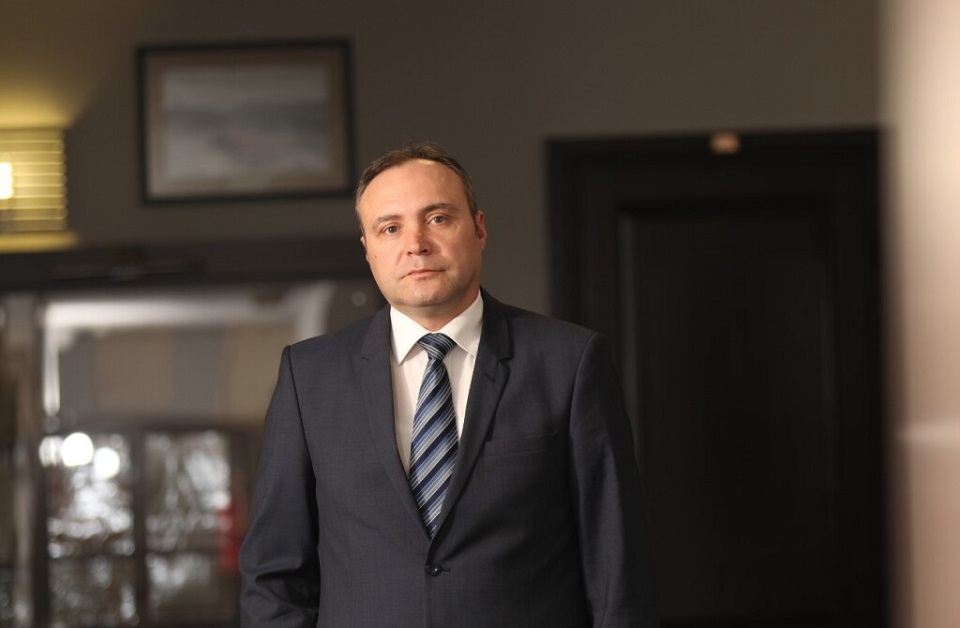
“Hydrogen opens up a labor market unlike anything we’ve seen since the early days of digitalization. We’re talking about new professions formed at the intersection of energy, industry, and technology — and those who train today will be the architects of tomorrow’s economy. In fact, the question is no longer if we’ll have a hydrogen-based economy, but who will have the people capable of building it. The countries and companies investing today in training and research will set the rules of the game tomorrow,” says Prof. Dr. Eng. Dumitru Chisăliță, President of the Intelligent Energy Association.