
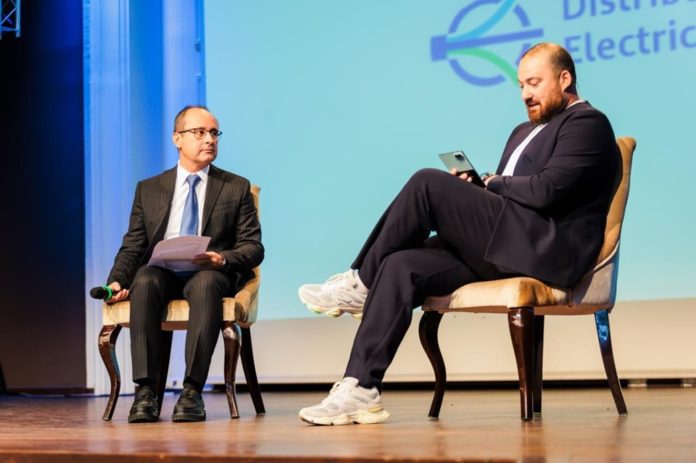
Romania still has no clear timeline for the restart of Units 1 and 2 at the Cernavodă nuclear power plant, while the electricity market outlook for the next ten days is “very worrying”, Cristian Bușoi, State Secretary at the Ministry of Energy, said at the annual conference organised by InvesTenergy.
According to Bușoi, the prolonged shutdown of the two reactors increases the risk of higher electricity prices in the coming months, against the backdrop of already elevated gas prices across Europe.
“The lessons are not yet definitive, because we are still in a difficult situation. Units 1 and 2 at Cernavodă are still shut down and we do not have a clear prospect for their restart. At least for the next ten days, the forecast looks very worrying,” Bușoi said.
Each additional day of reduced nuclear generation represents an additional risk for electricity prices, he added.
“With every day that the situation continues like this, there is a risk that electricity prices will increase in the coming months, which obviously adds to the overall situation in the European Union and the very high gas prices,” Bușoi said.
The Romanian official said he had attended the Energy Council meeting in Dublin the previous week, where one of the conclusions was the need to prepare for “a winter and spring 2027 with very high electricity prices”. He also referred to warnings issued at European level by Energy Commissioner Dan Jørgensen.
One of the first conclusions from the current crisis is that Romania’s energy system has proved more resilient than many had expected, according to Bușoi.
“The energy system in Romania has proved to be more resilient than perhaps many people expected,” he said.
Bușoi praised Transelectrica and the National Energy Dispatch Centre for their response, as well as ANRE for accelerating the integration of new generation capacities into the system.
He specifically commended Transelectrica’s management and staff, as well as the team led by ANRE President George Niculescu, for approving the final documentation required to bring a significant number of producers into operation.
He also highlighted the efforts of Complexul Energetic Oltenia despite technical difficulties and ageing equipment, as well as the contribution of Hidroelectrica during peak hours.
“At Hidroelectrica, with the water in the reservoirs during peak hours, there was also a very, very significant mobilisation. And, obviously, private producers in renewables – wind and solar – helped us enormously, compensating as much as possible for the lack of electricity from Cernavodă,” Bușoi said.