
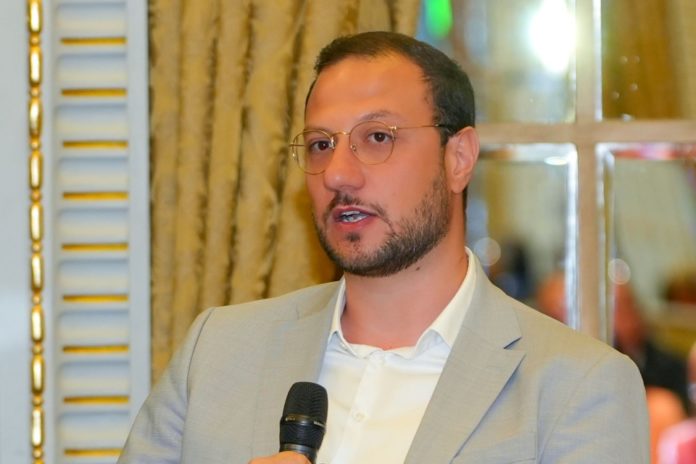
Many new energy investments expected to come online in the coming months should help Romania avoid a repeat of the electricity supply challenges experienced this summer, Mihnea Catuti, Executive Director of the Energy Policy Group (EPG), said at the Green Energy Conference, organized by The Diplomat-Bucharest.
“Many investments that are due to come online in the coming months will help us avoid a situation similar to this summer next year. I am mainly referring to two large natural gas capacities, and we have seen how significant the need for them is at this moment,” Catuti said.
He said Romania’s overall direction in the energy sector remains clear, while stressing that policies and strategies will need to be adjusted as the system evolves and new challenges emerge.
“The direction remains quite clear. This does not mean that we should not adapt the measures and strategies we develop along the way, as we confront reality, as we did this summer,” Catuti said.
According to Catuti, policymakers should increasingly focus on flexibility and energy consumption, after years of concentrating primarily on expanding electricity generation capacity.
“When it comes to expectations from policymakers, I would focus on two areas. The first is that, so far, a very large part of the effort has been directed towards the supply side, towards electricity generation. Now we are also shifting towards flexibility,” he said.
“But I would say that we are still not looking sufficiently at the demand side. Although we have continued to add electricity generation capacity, mainly renewable capacity, electricity consumption has not increased at the same pace,” Catuti added.
He argued that Romania needs to accelerate the electrification of its economy, particularly in sectors with significant energy consumption.
“I would look at the measures Romania is adopting for electrification. In Europe, electricity accounts for 23% of final energy consumption. In Romania, it is only 16%. We are second to last in Europe in this ranking,” Catuti said.
Romania is also facing a significant gap between its current level of electrification and its long-term targets.
“We are already talking about an extremely ambitious target of 46% for 2040. And we are extremely far from that,” he said.
Catuti said Romania’s industrial sector should be at the center of efforts to increase electricity consumption, given its importance to the country’s economy.
“We need to increasingly turn our attention towards heavy industry, which will continue to remain a pillar of the Romanian economy,” he said. “In Romania, gross value added from the industrial sector represents a larger share of GDP than even in Germany,” Catuti added.
At the same time, he identified administrative capacity as the main obstacle to the development of new power generation units.
“The main barrier to the development of new power generation units is administrative capacity,” Catuti said. “I would also say that the general environment for the electrification of the economy is not favorable. Why? Romania is one of the few EU member states where the price of electricity paid by household consumers is similar to that paid by industrial consumers,” he added.
Catuti said government support for household consumers is justified when it is targeted at genuinely vulnerable consumers, but broad-based support can create distortions that undermine the economic case for electrification.
“The need to try to subsidize household consumers is commendable and necessary, but only for those who are genuinely vulnerable,” he said.
“As long as we remain in this paradigm, in which we believe we can satisfy everyone at the same time, we will remain stuck. And the business case for electrification and increasing consumption will not be there,” Catuti added.
He also cautioned against expectations of a significant decline in average electricity prices in the near term.
“We talk a lot about increasing or reducing energy prices. There is a difficult truth to say publicly: the average electricity price for consumers is unlikely to decrease in the coming period,” Catuti said.