
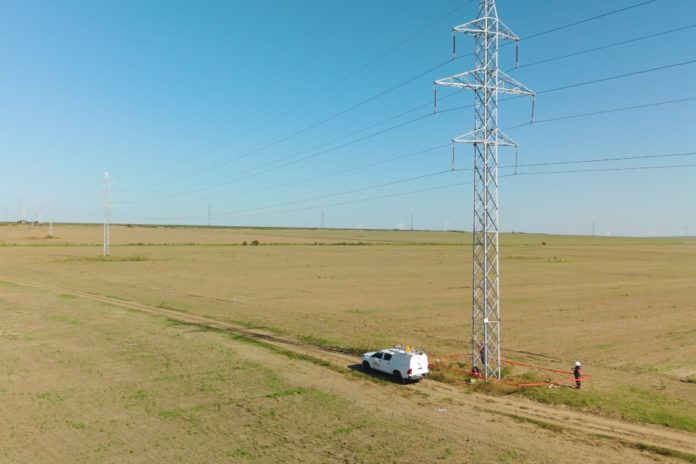
Rețele Electrice România, the electricity distribution operator, part of the PPC group in Romania, will start a project worth about 86 million lei (VAT included) for the modernization three 110 kV high-voltage power lines in Constanța county, as well as a 110 kV line in Tulcea county. The investment is co-financed with over 46.3 million lei (excluding VAT) through the Sustainable Development and Just Transition Program (PDDTJ) 2021-2027, through a contract signed with the Ministry of Investments and European Projects.
The project aims to modernize the four overhead power lines, by replacing the electrical conductors and equipment in the adjacent stations, doubling the transmission capacity of the lines and allowing a greater amount of renewable energy to be taken into the distribution network.
The three 110 kV lines in Constanța county supply, through the Sitorman, Săcele and Mihai Viteazu transformer substations, the industrial area of the Sitorman quarry and the neighboring localities, while the 110 kV line in Tulcea county serves the area of Topolog, Ciucurova, Nalbant, Frecăței, Cataloi and Tulcea.
“This project strengthens one of our objectives, that of creating a resilient distribution network, capable of supporting new ways of energy consumption and production. Dobrogea is an optimal area for the production of energy from renewable sources, and by doubling the transmission capacity of these overhead power lines, we support the development of this production, while facilitating the transport of energy to customers”, said Mihai Pește, General Director of Rețele Electrice România.
The works will include the rehabilitation of the existing poles for the four high-voltage lines. The new electrical conductors will be state-of-the-art, allowing the transport of an increased amount of electricity, which will ensure an efficient integration of production from renewable sources.
In addition, in the 110/20 kV Sitorman, Săcele, Mihai Viteazu transformer substations, the current transformers will be replaced, whose current capacity of 300 A (amperes) will be increased to 600 A, in order to safely take over the additional amount of energy transported through the new conductors. In addition, digital relays will be installed to ensure the differential protections of the short lines and their integration into the National Energy System. Through digital equipment, faults will be identified more quickly and resolved through remote, safely managing the increasing volumes of energy produced from renewable sources.
The implementation period of the project is 20 months from the date of signing the financing contract.