
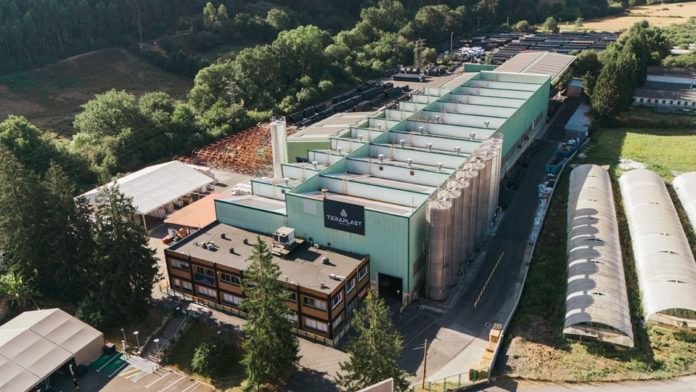
TeraPlast Group, the largest polymer processor in South-Eastern Europe, recorded a consolidated revenue of RON 574 million in the first half of 2026, up 4% compared to the same period of last year. The increase was primarily driven by the performance of the Installation and Packaging divisions, which together generate almost 90% of the Group’s revenue.
During the same period, the gross margin increased by 9% in absolute value, from RON 206.5 million in H1/2025 to RON 224.4 million in H1/2026. As share in turnover, the gross margin increased from 37% to 39%, reflecting efficient procurement cost and inventory management in a highly volatile environment.
The increase in gross margin was eroded by a faster rise in several expense categories. These included RON 7.9 million related to works in progress at the Aquatica Experience construction sites (presented under Other expenses), RON 6.9 million in employee benefit expenses, due to the base effect (generated by the consolidation of Aquatica Experience and the commissioning of the Zsámbék plant), and RON 4.1 million in transportation expenses.
Consolidated EBITDA amounted to RON 42.5 million, down 9% compared to the first half of 2025, when it stood at RON 46.9 million. The decrease mainly reflects lower sales volumes in the Installations and Compounds divisions. As a result, the consolidated EBITDA margin stood at 7.4%, compared to 8.5% in the same period of the previous year.
The net result was of RON -4 million, compared with a net profit of RON 3.4 million in the first half of 2025. The Group therefore recovered a significant portion of the RON 10.6 million loss recorded after the first quarter of the current year, supported by the RON 6 million net profit generated in Q2/2026. Nevertheless, the net result was affected by higher finance costs arising from foreign exchange differences and interest expenses, which were RON 2.2 million above the level recorded in H1/2025.
Sales outside Romania reached RON 202.8 million, up 4% compared to the first half of 2025, while maintaining a 35% share of consolidated revenue. This result proves the resilience of the Group’s international operations and validates its geographical expansion strategy, despite the challenging economic and competitive environment across most external markets.
In volume terms, the Group sold 60 thousand tonnes in the first half of the year, down 5% compared with the same period of 2025, when volumes exceeded 63 thousand tonnes. The decrease was driven by weaker demand in the Granules market and below-potential demand, in volume terms, in the Installations market.
“We cannot control the economic or geopolitical environment, but we can control how we run our company. In the first half of the year, transportation costs increased by almost RON 4 million compared with the same period of last year. Rather than accepting this situation as a given, we decided to act. We brought into the Group a Romanian professional who has built his career abroad over the past 30 years, managing international transport fleets. I am confident that his experience and expertise will contribute to making this activity more efficient and reducing costs. This is how we have built TeraPlast over the past 30 years: we identify problems, make decisions and invest in people who can make a difference,” said Dorel Goia, Chairman of the Board of Directors of TeraPlast.
““The first half of the year reflects different market conditions from one division to another, with the common denominator being pressure on costs and lower volumes in certain segments, which affected the Group’s profitability. The second quarter helped us recover part of the loss recorded in the first part of the year, considering that EBITDA increased by 30% in Q2/2026 compared with Q2/2025 and we recorded a net profit of RON 6 million. In the period ahead, we will focus on improving profitability and reducing leverage. Starting with the third quarter, we will also consolidate the operations in Spain, which will contribute to this objective. We remain resilient in a volatile environment and continue to pursue our long-term growth strategy, building on the investments made in recent years, our international expansion, and the efficiency measures implemented across the Group,” said Bogdan Crăciunaș, Chief Financial Officer of TeraPlast Group.
Divisions’ results
Installation division: 73% of consolidated revenue
- Revenue increased by 5% in H1/2026 compared to H1/2025, from RON 402 million to RON 420.9 million.
- EBITDA amounted to RON 32.4 million, 24% below the level recorded in first half of last year (RON 42.5 million). The EBITDA margin stood at 7.7%, compared with 10.6% in H1/2025.
During the first half of the year, the Romanian installation market operated in a challenging environment, characterized by a slower pace of new infrastructure project launches and delays in the implementation of projects already underway, driven by financing constraints, delayed reimbursement of works performed and higher construction costs.
In the distribution segment, demand remained cautious, with customers focusing primarily on firm orders while reducing inventory levels amid uncertainty regarding market development. These factors-maintained pressure on prices and margins across certain product categories. At the same time, the geographical diversification of the Group’s operations enabled it to capitalize on opportunities in several international markets, contributing to the division’s resilience in this market environment.
Granules division: 7% of consolidated revenue
- The H1/2026 revenue amounted to RON 41 million, 19% lower than in H1/2025, when it reached RON 50.5 million.
- EBITDA amounted to RON 3.6 million, down 38% compared to the first half of 2025 (RON 5.8 million). The EBITDA margin stood at 8.7%, compared with 11.5% in the same period of last year.
In the first half of the year, the PVC compounds market faced multiple challenges, primarily driven by weaker demand from the cable industry and the postponement of investment projects, resulting in a market contraction compared with the same period last year. Lower sales volumes intensified competition in an environment also marked by raw material price volatility, putting pressure on prices and margins across the industry. Under these circumstances, the division adapted its commercial strategy to maintain its competitiveness and mitigate the impact of external factors.
Packaging division: 16% of consolidated revenue
- Revenue increased by 21% in the first six months of 2026, compared with the same period last year, from RON 74.8 million to RON 90.4 million.
- EBITDA reached almost RON 9 million, returning to positive territory and improving significantly compared with H1/2025, when it stood at RON -1.5 million. EBITDA margin reached 9.9% in the first six months of 2026.
The Packaging Division delivered the strongest performance within the Group during the first half of the year, supported by a temporary acceleration in market demand driven by the geopolitical developments and concerns over raw material availability. This environment generated strong sales volumes and solid operating performance, contributing significantly to the division’s results. Towards the end of the first half, as market conditions normalized and raw material prices corrected rapidly, demand slowed amid a more cautious purchasing approach by customers. Under these circumstances, performance in the coming period will remain dependent on demand dynamics and market stabilization, in an environment that remains highly volatile.
Windows division: 4% of consolidated revenue
- Revenue amounted to RON 21.7 million in H1/2026, 12% lower than in H1/2025, when it reached RON 24.6 million.
- The division reported negative EBITDA of RON -2.5 million, compared with RON 70 thousand in the same half of last year.
During the first half of the year, the Windows division operated in a market characterized by weak demand and high raw material costs, resulting in lower sales volumes and revenue. Lower volumes, combined with the limited ability to pass higher raw material costs on to customers, led to lower fixed-cost absorption and, consequently, weaker operating profitability. At the same time, the division continued implementing a comprehensive transformation and efficiency program focused on optimizing commercial, manufacturing, and logistics processes, digitalizing customer interactions, and improving operational efficiency. These initiatives are aimed at strengthening the company’s competitiveness and creating the foundation for improved medium-term performance in a market context that remains challenging.