
Opinion: How artificial intelligence, geopolitics, climate change, and digitalization are rewriting the rules of modern institutions
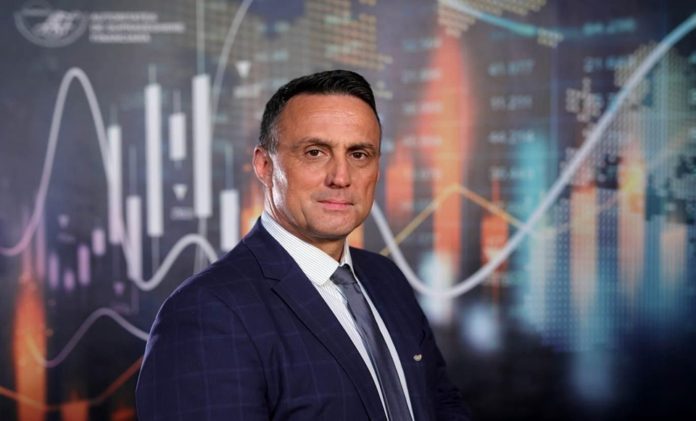
At the international conference “Economic Issues – New Challenges” EINCO 2026, organized by the University of Oradea, the President of the Institute for Financial Studies, Mr. Valentin Ionescu, stated:
“We are living through one of the fastest periods of transformation in recent history. Artificial intelligence, digitalization, geopolitical tensions, and climate change are profoundly reshaping the way economies, institutions, and societies function.
Every day, we witness technology evolving faster than our ability to adapt regulations, systems, and leadership models. In this new environment, institutions are no longer dealing with isolated crises, but with interconnected risks that influence one another: cyberattacks, disinformation, economic volatility, social pressures, and continuous technological disruption. This is why I believe the time has come to rethink how we build leadership, public policies, and institutional resilience.
Today, adaptability is becoming just as important as stability. Leaders can no longer operate solely within the logic of traditional administration. What is needed now is vision, anticipation, and a deep understanding of technology’s impact on society.
Artificial intelligence offers extraordinary opportunities. In the financial sector, for example, AI-based systems are already helping detect fraud, analyze risks, and automate complex processes. In insurance, technology contributes to faster claims assessment and improved crisis-response mechanisms. At the same time, however, we must clearly understand that technology cannot replace human responsibility.
No matter how advanced intelligent systems become, critical decisions must remain under meaningful human control, especially in sensitive areas such as finance, healthcare, justice, and critical infrastructure. Artificial intelligence should support human decision-making, not replace judgment, ethics, and accountability.
One of today’s greatest challenges is the growing gap between the speed of innovation and the speed at which regulatory systems can respond. For this reason, international cooperation and dialogue between institutions, industry, and academia are becoming essential. In recent years, AI safety summits have emerged in response to growing concerns about autonomous systems and digital disinformation. These issues are no longer purely technological – they concern security, economic stability, public trust, and social resilience.
In this context, organizations and public institutions are no longer facing isolated disruptions, but overlapping systemic pressures that require adaptive governance, resilient decision-making, and anticipatory strategic thinking. The pace of innovation is surpassing the ability of regulatory systems to adapt, while the rise of generative AI, cyber vulnerabilities, and synthetic information ecosystems is creating new operational, reputational, and societal risks.
I believe that the institutions best prepared for the future will be those capable of combining innovation with responsibility, technology with ethics, and efficiency with resilience. The leadership of the future will no longer be defined by rigid control, but by the ability to navigate complexity, build trust, and rapidly adapt organizations to change.
Technological transformation will continue. The real question is whether we, as institutions and societies, can evolve quickly enough to ensure that this transformation remains aligned with people, democratic values, and long-term societal resilience.
At the same time, a fundamental principle must be reaffirmed: technology must remain under meaningful human control. Artificial intelligence can improve efficiency, risk detection, and decision-support systems, but it cannot replace human accountability, ethical reasoning, or democratic responsibility.
Through the initiatives and debates promoted by the Institute for Financial Studies, we aim to actively contribute to this essential conversation about the future of governance, leadership, and resilience in a world undergoing continuous transformation”.