
Powering Romania’s Energy Transition | Editorial Series by The Diplomat-Bucharest
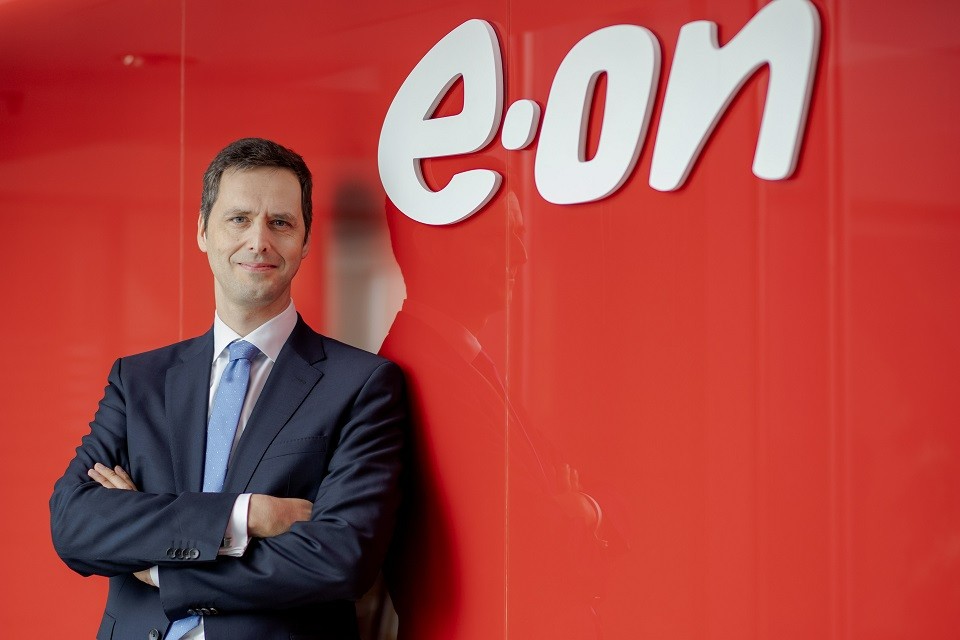
“We now see a wave of investment projects in energy coming online this and next year. Thousands of MW of additional generation capacity in gas, wind and solar in the next months, and Neptun Deep next year, will contribute to significantly lowering energy costs – if grid investments are increased to fully integrate these capacities,” Volker Raffel, CEO of E.ON Romania told The Diplomat-Bucharest.
“I remain confident in Romania’s energy security outlook for 2026-2030. I cannot predict the international developments and whether they will bring more shocks or not. But I see an increase in renewable energy, more domestic gas, and the EU working on better interconnections, so the direction is the right one. But in order not to miss the opportunities, we also need to connect all the new renewable capacities and the batteries – we must not forget the grid, as there is no way around it.”
How do you evaluate Romania in terms of cost competitiveness versus productivity in the energy sector, amid rising EU carbon pricing?
Romania has all it needs to improve its competitiveness significantly in a relatively short term, but currently it is not sufficiently competitive.
Let us start by facing the current situation. Many investments currently go to Spain. The wholesale electricity price is at around 45€/MWh there, about 90€/MWh in Germany and roughly 135€/MWh in Romania on average. Or when they are coming to the region, Hungary has recently attracted more foreign direct investment than Romania has, and many investments by state-owned companies in energy production capacities have remained blocked for years or even decades, and many of them still have not been unblocked, even in the fifth year after the energy crisis started. Romania has the last investment grade – with a negative outlook, i.e. if reforms of the state are not made, the macroeconomic situation could quickly deteriorate significantly, and many investors would not be allowed anymore to invest in Romania. Taxes like the turnover tax or “taxa pe stâlp” – taxing investments before they deliver profit, not thereafter – are slowing down economic activity and will reduce tax income over time rather than increasing it. Unnecessary bureaucracy, such as imposing public procurement law on listed companies, and poor digitization in public administration are slowing down investments, which means less GDP growth and greater pressure on the state budget.
And the current regulation of energy distribution grids hinders investments – investments required to better evacuate the cheap energy produced by renewables, and investments required to reduce the grid connection costs for investors who want to come to Romania. I have a long list of investors along the new Moldova highway who want to build new factories, but my financing capacity for investments to connect them is restricted by regulation – a strategic mistake for economic growth. If these investors were to start consuming electricity, the tariff in bani/kWh would become lower, even if the investments cost money, and the economy would grow more, offering better jobs, wealth and tax income. I doubt these investors will still want to invest under these circumstances.
The Romanian state as a partner unfortunately is extremely unreliable. Even where the budget is available, such as EU funds administrated by the Romanian state, payments to investors are too often delayed, be it in construction, health, agriculture or energy. In energy alone, we talk about an involuntary permanent multi-billion-€ credit of energy suppliers to the Romanian state since the end of 2021. What sign is that for any investor, Romanian or not?
Each successful cure starts with a clear diagnosis, and the good news is that the mentioned problems can be fixed.
How could public authorities better support investors in energy projects?
Overall, political will to continue reforms is essential. The turnover tax is limited until the end of 2026 and must not be prolonged. Public procurement law must not be applied anymore to listed companies. Simplifying permitting and licensing procedures would have a significant positive impact all over the country.
More specifically in the electricity industry, the anti-investment bias in the current energy distribution regulation can be overcome. This would not necessarily even mean a tariff increase; legal clarifications can already help.
Happily, we now see a wave of investment projects in energy coming online this and next year. Thousands of MW of additional generation capacity in gas, wind and solar in the next months, and Neptun Deep next year, will contribute to significantly lowering energy costs – if grid investments are increased to fully integrate these capacities.
How confident are you about Romania’s energy security outlook for 2026-2030, given geopolitical disruptions?
Never waste a crisis. With the energy shock due to Putin’s war and the closure of the Strait of Hormuz, for me one thing becomes clear: do not give many fish to the hungry fisherman, but a fishing rod. Or one fish, and the rod.
What I mean is this: reducing tax on fuel is a fish, subsidizing oil which we do not have enough of. This may be necessary in the immediate peak of a sudden crisis, but not for long. But then comes the fishing rod: reduce tax on electricity, which makes it more attractive to use electricity for mobility and much more, as this makes us less vulnerable to geopolitical developments – currently Romania transfers RON 40-50 bn a year abroad for buying fuel instead of investing it within our country.
I remain confident in Romania’s energy security outlook for 2026-2030. I cannot predict the international developments and whether they will bring more shocks or not. But I see an increase in renewable energy, more domestic gas, and the EU working on better interconnections, so the direction is the right one. But in order not to miss the opportunities, we also need to connect all the new renewable capacities and the batteries – we must not forget the grid, as there is no way around it.
Where do you see the biggest growth opportunities in Romania’s energy mix during this period?
The greatest opportunities in Romania’s energy mix lie in renewable energy and storage. Romania has significant untapped wind potential, a rapidly growing base of prosumers and increasing demand for batteries needed to balance the intermittency of renewable generation.
The focus will be on projects that combine new generation capacity with storage systems and grid modernization, maximizing both system efficiency and investment returns. Infrastructure bottlenecks increase costs for customers more than timely investments do.
Projects that integrate grid digitalization and flexibility solutions will become increasingly important. However, the regulatory framework and access to financing will be decisive in turning these opportunities into tangible results for the economy.
The current oil crisis is likely to accelerate electrification, including the growth of electric vehicle fleets and charging infrastructure. This can reduce dependence on fossil fuel imports and support both energy security and the country’s decarbonization objectives.
What investment priorities will define your company’s roadmap in Romania’s energy sector over the next 3-5 years?
The coming years will be decisive for the modernization and digitalization of distribution networks, in order to improve the quality and safety of services provided to electricity and gas customers. The main challenge will be the integration of renewable energy sources and storage capacities, while on the supply side we will focus on developing energy efficiency solutions for households and industrial customers.
All of this requires stronger collaboration and coordination between operators, authorities and investors. It is also essential to ensure a predictable regulatory framework and improved access to financing, so that grid modernization and the transition to a greener and more flexible energy system can be implemented efficiently and sustainably. Currently, we are facing a deadlock regarding grid investments, also due to the fact that real inflation is not correctly reflected in ANRE calculations, which is becoming an increasing problem in the context of rising inflation and which we can and must overcome. A chain is only as strong as its weakest link, and the chain that drives Romania’s economic growth and wealth creation should not unnecessarily be weakened by hindering the financing of grid investments.