
Energy Policy Group (EPG), in partnership with Clean Air Task Force (CATF), convened policymakers, industry leaders, diplomats, and academics in Bucharest for a high-level discussion on development pathways for Romania’s nuclear energy sector. The discussion revealed both policy progress in securing EU and national support for the nuclear sector, and challenges concerning financing, ensuring the needed workforce, and managing public acceptance.
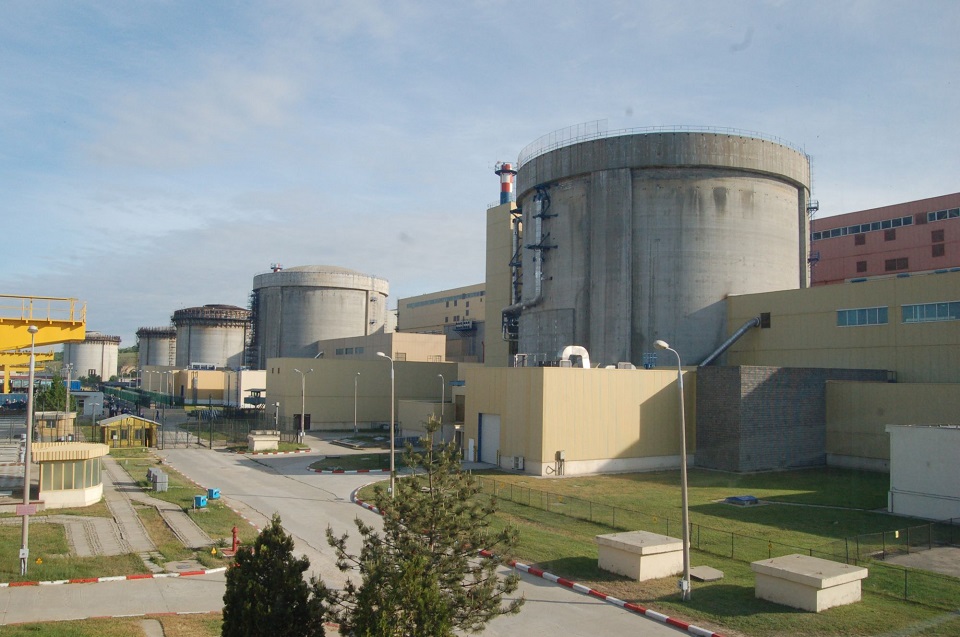
Opening the event, Radu Dudău, EPG President, Malwina Qvist, CATF Director of Nuclear Fission, and His Excellency Gavin Buchan, Ambassador of Canada to Romania, Bulgaria, and the Republic of Moldova, highlighted nuclear energy’s role in Romania’s long-term decarbonisation and energy security. Ambassador Buchan confirmed Canada’s commitment to support, in terms of technology and engineering, the development of Units 3 and 4 at the nuclear power plant, Cernavodă, which employ Canadian pressurized heavy-water reactor design (CANDU).
The Romanian nuclear program pursues three parallel nuclear tracks for nuclear power:
- Refurbishment of Cernavodă’s Unit 1, due to take place from late 2027 until the end of 2029
- Construction of Units 3 and 4 at Cernavodă targeting completion by 2032 — though the mid-2030s is a more realistic deadline
- Construction of a NuScale VOYGR 6 SMR in Doicești (Dâmbovița), expected to start by the end of this decade.
Achieving such goals would position Romania as a regional leader in nuclear energy, with a robust and diversified supply chain, and technical and operational expertise.
In a presentation of EPG’s upcoming three policy papers on the topic, Alina Arsani, EPG Head of Energy Systems, examined financing pathways for Romania’s nuclear program and deployment challenges, as well as the evolution of public perception on nuclear energy. She pointed out that securing investment in nuclear energy requires not only robust state support mechanisms, but also transparent engagement to build informed public acceptance.
A fireside chat on financing Romania’s nuclear energy trajectory, moderated by Malwina Qvist, brought together Cristian Bușoi, State Secretary in the Ministry of Energy, and Bogdan Termegan, Executive Director, Romanian Atomic Forum. The discussion examined Romania’s emerging multi-layered financing approach, combining state-backed mechanisms such as Contracts for Difference (CfDs) with international financing and potential market-based instruments, including corporate power purchase agreements (PPAs).
Most notably, the Energy Ministry announced to have demanded the European Commission to approve that Romania redirect EUR 600 m of its Modernisation Fund resources towards co-financing the refurbishment of Cernavoda’s Unit 1. This would be a surprising first in Europe, considering the Implementation Regulation of the Modernisation Fund, as well as a test of the current level of political support for nuclear across the Union.
Cristian Bușoi outlined three strategic priorities underpinning Romania’s nuclear program: energy security, decarbonisation, and competitiveness. Bogdan Termegan emphasised that Units 3 & 4 represent a proven pathway as Romania has built this technology before and the right partnerships are already in place.
A panel discussion moderated by Radu Dudău examined Romania’s workforce development for the nuclear sector, and the requirements for industrial capacity and grid integration. The panel consisted in Prof. Diana Robescu, Dean of the Faculty of Energy Engineering at the University Politehnica of Bucharest; Gheorghe Vișan, Director of the Energy Markets Division at Transelectrica; and Bogdan Termegan.
The event underscored that Romania’s nuclear ambitions demand coordinated action across financing, workforce, technology, grid planning, and public engagement. Success requires not only securing billions in financing but building public acceptance, retaining skilled workforce, and navigating complex EU policy dynamics.