
Romania’s hospitality industry recorded a 19 percent increase in turnover in the first half of 2025, the third largest advance in the European Union after Greece (35 percent) and Hungary (22 percent), according to Eurostat data, cited by Colliers. Rising room rates have pushed local pricing into line with established CEE markets such as Poland and the Czech Republic, even though the number of overnight stays in hotels almost stagnated, with an increase of less than 4 percent, shown by Eurostat data.
Meanwhile, Romania attracted just 2.2 million overnight stays by foreign tourists, compared with 7.2 million in Poland and 6.1 million in Hungary, though the market is preparing for at least 15 new hotel openings by 2027.
In terms of operating performance, occupancy in Romania rose by 4 percentage points to 65 percent, in line with the average across Central and Eastern European countries, which recorded the strongest growth in Europe in the first half of the year, according to STR data, alongside the Nordic states. By contrast, Western Europe saw growth of less than 2 percent, while France and the UK even posted declines, largely due to the absence of major events in 2025. Last year, hotel performance was boosted by the Champions League final in London, the Eras Tour in the UK and Ireland, and UEFA Euro 2024 in Germany.
Average daily rates also increased by 8 percent in the last year, a pace comparable to Poland and the Czech Republic, where levels range between 55 euro and 65 euro. In Bucharest, revenue per available room reached 78 euro, similar to Warsaw and Prague, which are situated at around 80 euro, and just 10 percent below Vienna, confirming the capital’s alignment with major regional markets.
The industry’s rapid growth nonetheless raises questions about sustainability. According to Colliers consultants, the advance has been driven primarily by price increases rather than by higher tourist numbers, while the broader economic context – marked by inflation and new taxes introduced in 2025 – could dampen consumption. Romanians have so far managed to cope with higher costs by relying on savings accumulated over the past 15 years, but consumer confidence has visibly declined in recent quarters, reaching levels similar to those seen during the 2009 – 2010 recession.
“Compared with 2019, the net turnover of all operators in Romania’s hospitality sector is over 80 percent higher – more than twice the EU average growth of just 34 percent, according to Eurostat data. Romanians have continued to travel and to accept ever-higher room rates, while Bucharest has now reached price levels comparable with various regional capitals, from Vienna to Warsaw and Prague. This evolution has made the 2023-2025 period an excellent one for hoteliers. However, future rate increases cannot rely solely on inflation; they will need to stem from service diversification, innovation, and the use of AI technology. Driving cost efficiencies while maintaining hotel service quality will be key in the period ahead, which is expected to be more challenging for the hospitality industry. To sustain momentum, Romania must attract more foreign tourists and provide a broader range of reasons to visit. The potential is there, but success depends on investment and on a long-term strategy”, explains Raluca Buciuc, Director, Partner of Valuation360 and Advisory Services at Colliers.
Romania still lags behind neighbouring markets in attracting foreign visitors. Over the past decade, the number of overnight stays by international tourists has increased by just 23 percent, compared with 44 percent in Poland and 26 percent in Hungary. The gap highlights significant potential for developing inbound tourism and for rebalancing a market currently dominated by domestic travel. In 2025, only 22 percent of overnight stays in Romanian hotels were by foreign visitors – the second lowest share in the European Union.
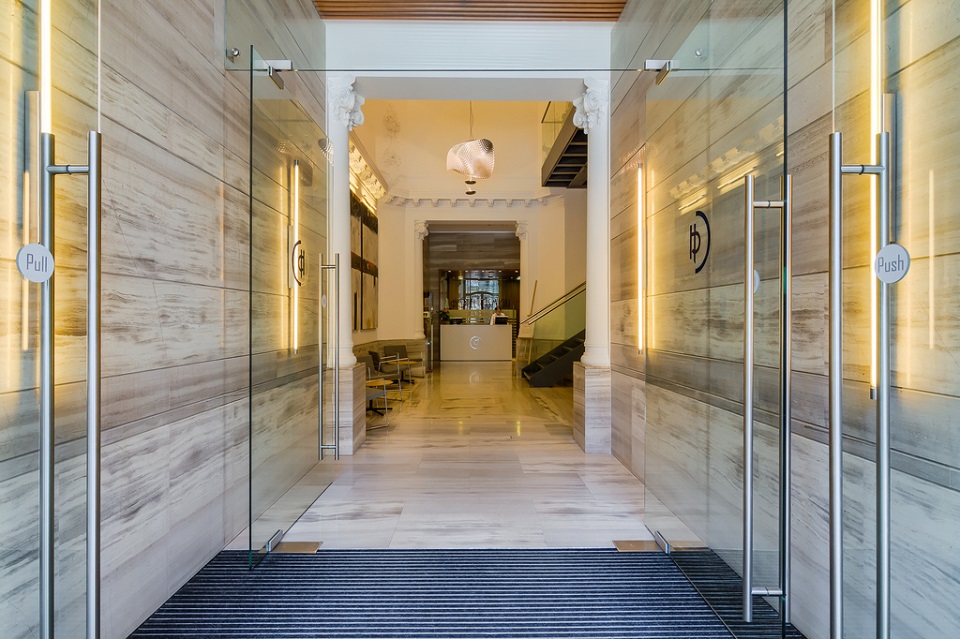
To bridge this gap and balance growth, the local market is entering a new stage of expansion. After only one major international opening in 2024 – the Ramada by Wyndham in Otopeni, with more than 110 rooms, at least 15 new hotels are scheduled between 2025 and 2027. These include the Corinthia Grand Hotel du Boulevard, which opened this year with approximately 30 rooms,marking Corinthia’s entry into the local market. The Bucharest Unirii Square – Handwritten Collection by Accor, which added 90 rooms to the Bucharest market in the spring of this year, is the first hotel of this brand in Romania. These investments come as Bucharest’s occupancy rates are comparable with post-2000 highs, and the first half of 2025 already represents the best first semester in at least a decade, since the National Institute of Statistics began publishing county-level data.