
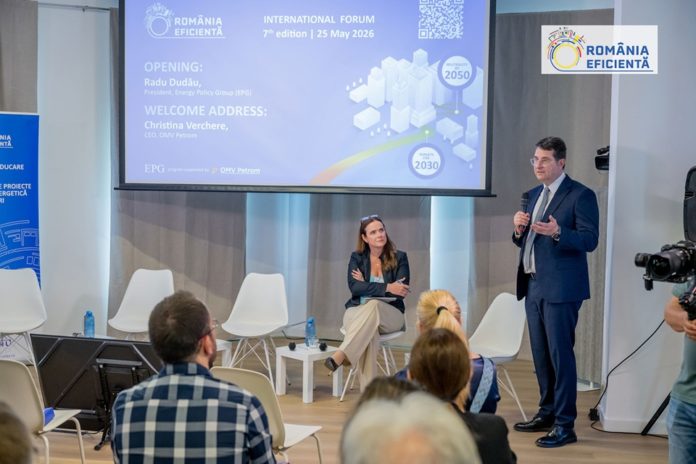
Romania must significantly accelerate the renovation and modernization of its building stock if it is to meet European climate commitments while tackling energy poverty and rising housing costs, according to experts participating in the “România Eficientă” Forum 2026.
Speakers at the event warned that the country’s aging residential and public buildings remain among the largest consumers of energy, making large-scale renovation a key priority for both decarbonization and social welfare. Discussions centered on how Romania can transform its building sector into a more sustainable, affordable and energy-efficient component of the national economy.
Industry specialists emphasized that implementation of the European Union’s revised Energy Performance of Buildings Directive presents an opportunity to reduce household energy bills, improve living conditions and stimulate investment across the construction sector. However, participants noted that achieving these benefits will require stronger institutional coordination, predictable financing mechanisms and a long-term renovation strategy.
A recurring theme throughout the forum was the link between climate policy and housing affordability. Experts argued that energy-efficient buildings can play a major role in protecting consumers from volatile energy prices while reducing greenhouse gas emissions. Renovation projects were also highlighted as a source of economic growth, capable of generating skilled jobs and supporting innovation in construction materials and technologies.
The conference also explored the growing importance of circular construction practices. Stakeholders discussed methods for reducing the carbon footprint of buildings throughout their lifecycle, including the use of low-carbon materials, improved waste management and the adoption of sustainability indicators in planning and development processes.
Another major topic was the upcoming implementation of the EU’s ETS2 carbon pricing mechanism for buildings and transport. Participants stressed the need for targeted social support measures to ensure that vulnerable households are not disproportionately affected by the transition. The future Social Climate Fund was identified as a potential tool for helping citizens invest in energy-efficiency improvements and cleaner technologies.
Experts concluded that the next few years will be decisive for Romania’s climate and housing agenda. While significant funding opportunities are available through European programs, successful implementation will depend on effective public policies, private-sector engagement and increased public awareness regarding the benefits of energy-efficient buildings.
The discussions at “România Eficientă” Forum 2026 reflected a broader consensus that building renovation is no longer solely an environmental issue, but a strategic economic and social priority that will shape Romania’s development trajectory through 2030 and beyond.