
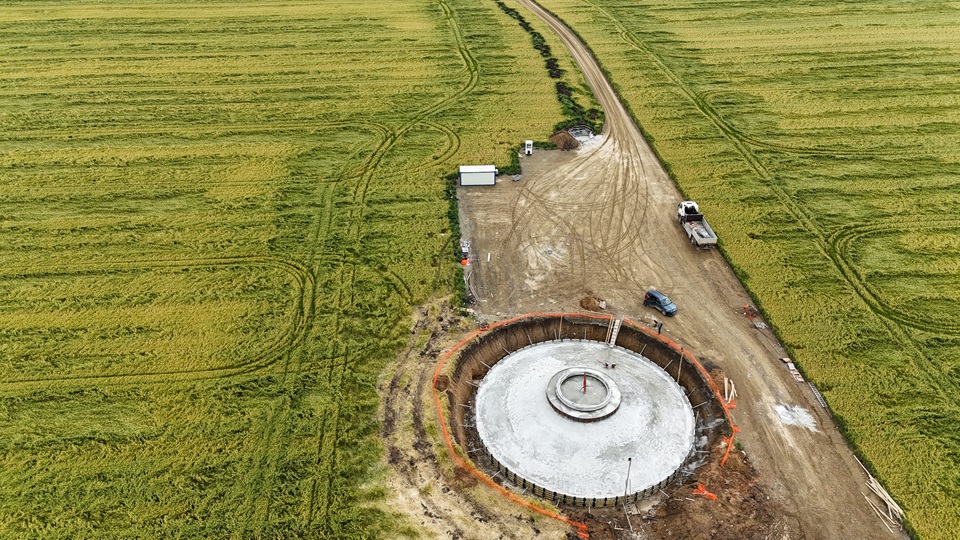
Eurowind Energy Romania has received the construction permits for the Siminoc project, the first hybrid wind–solar park of Eurowind Energy Romania in Constanța County with an estimated investment of approximately EUR 65 million. The project benefits from the Contracts for Difference (CfD) scheme, which provides long-term investment stability and supports predictable execution.
The Siminoc project will have a total installed capacity of approximately 49.6 MW, evenly split between wind and photovoltaics at about 24.8 MW each. Based on current technical modelling, annual output is estimated at approximately 120 GWh, equivalent to the yearly consumption of over 50,000 households.
The implementation schedule foresees the permitting and issuance of the construction permit in the first half of 2026 – phase completed, start of works in 2027, and commissioning in 2028, with adjustments possible depending on administrative timelines and grid-connection windows. The selection of turbine models and PV panels, as well as the final configuration of any BESS equipment, will be decided as the project advances into the procurement phase.
Adrian Dobre, Country Manager, Eurowind Energy Romania, said:
“We no longer look at projects merely as generation assets, but as resources that provide real flexibility to the energy system, and our first hybrid wind-solar park in Romania, Siminoc, is an example in this respect. We also plan to integrate battery storage in all our projects, so we can better align production with demand, reduce local variability, and contribute responsibly to the safe integration of renewable energy. Our local ambition is to reach 1GW by 2030 with a sustainable investment plan of around 1 billion euro in the next 4 years.”
At the local level, the project will generate economic activity during construction, create temporary jobs and permanent roles in operation, and contribute to community budgets through taxes and duties. Implementation will be carried out in close cooperation with public authorities and grid operators.